Fourth Sunday of Lent, 2013

In today\’s Gospel we see a loving man with two sons. The younger son asks for his share of his father\’s estate; his father gives it to him and in a few days the son leaves home for a far distant land. He spends all his inheritance on a life of dissipation. When he had spent everything, a famine came over the land and he found himself in dire need. He hired himself out to one of the local citizens who sent him to feed the swine. Hungry and tired, he longed to eat the pigs\’ food, but no one gave him anything. Coming to his senses, he thought, \”How many of my father\’s hired workers have more than enough to eat, but here I am, dying of hunger. I shall get up and go to my father and say to him, \’Father, I have sinned against heaven and against you. I no longer deserve to be called your son; treat me as you would treat one of your hired workers.\’\” So he got up and went back to his father. While he was still a long way off, his father caught sight of him, and was filled with compassion. He ran to his son, embraced him and kissed him…
Let\’s pause here to recall a story our chaplain, Fr. Paul Philibert, told us one Sunday during the homily. He said that a fisherman friend once told him the two characteristics of a good fisherman: memory and hope. A fisherman always remembers that big fish he caught and he has a sure hope of catching one like it again. Could we say a good Christian is like this? In this parable, the son \”comes to his senses\”–he \”remembers\” how his father treats his hired men, and he \”hopes\” to be treated at least like one of the servants. He repents hurting his father. But when he came home, his father was just happy to have his son back. He told his older son, \”Your brother was dead and has come to life again; he was lost and has been found. So we must celebrate and rejoice!\” 
The rest of the story is about the older son and is important. But for now, let it suffice to consider that as the younger son remembered and hoped, so may we when we seem to hit bottom. Let us remember the goodness of the Lord and trust in His prodigal mercy! As the father waited for his son to come back, so does our heavenly Father wait for us. He embraces us and kisses us when we return. \”We must celebrate and rejoice!\”
Third Sunday of Lent, 2013

<!– /* Font Definitions */ @font-face {font-family:Calibri; panose-1:2 15 5 2 2 2 4 3 2 4; mso-font-charset:0; mso-generic-font-family:auto; mso-font-pitch:variable; mso-font-signature:3 0 0 0 1 0;} @font-face {font-family:"Bookman Old Style"; panose-1:2 5 6 4 5 5 5 2 2 4; mso-font-charset:0; mso-generic-font-family:auto; mso-font-pitch:variable; mso-font-signature:3 0 0 0 1 0;} /* Style Definitions */ p.MsoNormal, li.MsoNormal, div.MsoNormal {mso-style-unhide:no; mso-style-qformat:yes; mso-style-parent:""; margin-top:0in; margin-right:0in; margin-bottom:10.0pt; margin-left:0in; line-height:115%; mso-pagination:widow-orphan; font-size:11.0pt; font-family:Calibri; mso-ascii-font-family:Calibri; mso-ascii-theme-font:minor-latin; mso-fareast-font-family:Calibri; mso-fareast-theme-font:minor-latin; mso-hansi-font-family:Calibri; mso-hansi-theme-font:minor-latin; mso-bidi-font-family:"Times New Roman"; mso-bidi-theme-font:minor-bidi;} p.MsoHeader, li.MsoHeader, div.MsoHeader {mso-style-priority:99; mso-style-link:"Header Char"; margin:0in; margin-bottom:.0001pt; mso-pagination:widow-orphan; tab-stops:center 3.25in right 6.5in; font-size:11.0pt; font-family:Calibri; mso-ascii-font-family:Calibri; mso-ascii-theme-font:minor-latin; mso-fareast-font-family:Calibri; mso-fareast-theme-font:minor-latin; mso-hansi-font-family:Calibri; mso-hansi-theme-font:minor-latin; mso-bidi-font-family:"Times New Roman"; mso-bidi-theme-font:minor-bidi;} span.HeaderChar {mso-style-name:"Header Char"; mso-style-priority:99; mso-style-unhide:no; mso-style-locked:yes; mso-style-link:Header;} .MsoChpDefault {mso-style-type:export-only; mso-default-props:yes; font-size:11.0pt; mso-ansi-font-size:11.0pt; mso-bidi-font-size:11.0pt; font-family:Calibri; mso-ascii-font-family:Calibri; mso-ascii-theme-font:minor-latin; mso-fareast-font-family:Calibri; mso-fareast-theme-font:minor-latin; mso-hansi-font-family:Calibri; mso-hansi-theme-font:minor-latin; mso-bidi-font-family:"Times New Roman"; mso-bidi-theme-font:minor-bidi;} .MsoPapDefault {mso-style-type:export-only; margin-bottom:10.0pt; line-height:115%;} @page WordSection1 {size:8.5in 11.0in; margin:1.0in 1.0in 1.0in 1.0in; mso-header-margin:.5in; mso-footer-margin:.5in; mso-paper-source:0;} div.WordSection1 {page:WordSection1;}

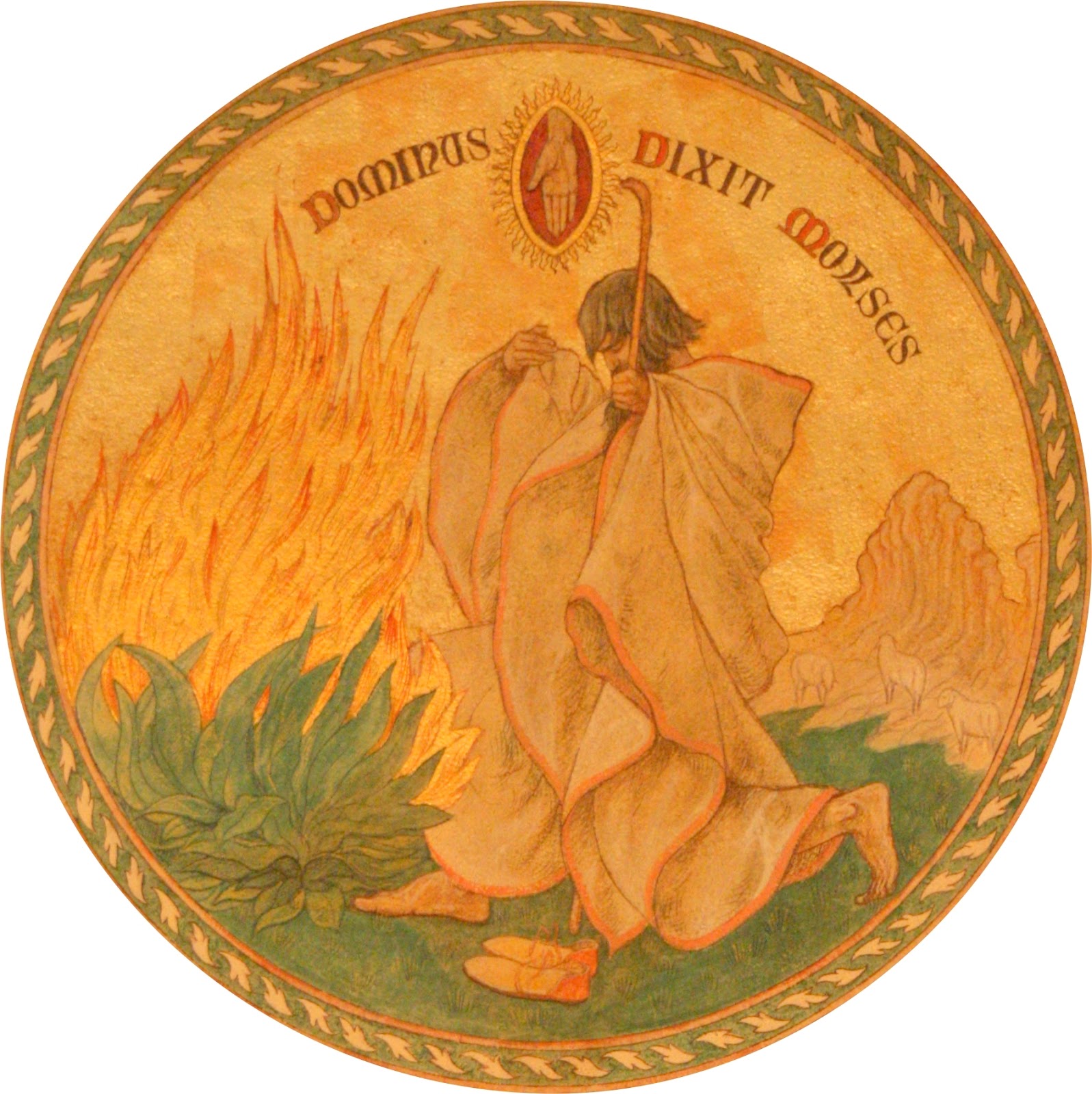
The image of the burning bush is one that has always captured the human imagination. Not only was the bush in flames, but it was not consumed or harmed. God drew Moses’ attention by the fire so that when he approached it God could reveal Himself.

A famous “desert father” story comes to mind:

Abba Lot went to see Abba Joseph and said to him: ‘Abba, as far as I can I say my little office, I fast a little, I pray and meditate, I live in peace and as far as I can, I purify my thoughts. What else can I do?’ Then the old man stood up and stretched his hands towards heaven. His fingers became like 10 lamps of fire and he said to him, ‘If you will, you can become all fire.’                  (Joseph of Panephysis #7)

This is what we are invited to become, especially during this Lent of the Year of Faith. As we surrender more to God’s will, we are enflamed with His love, bearing witness to His presence in the world beckoning men and women to find meaning and happiness in a relationship with the Holy Trinity—Father, Son and Spirit.

Generator!

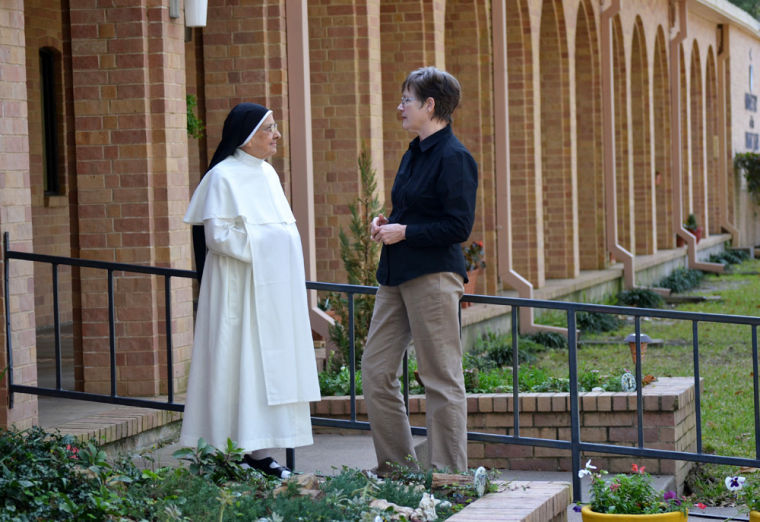
Sr. Mary Veronica chats with our dear friend Elaine Jackson, who has been helping us so much!
Readers of \”Monastery Bells\” (available on our website or by surface mail) know that we have been trying hard to raise money for a generator to keep the lights on when our power goes out–as it does very often when we have major storms, etc. Today, the Lufkin Daily News, our local newspaper, ran a lovely article on our generator needs. We encourage you to read it HERE. We are so grateful to all our family, friends and benefactors who are helping us achieve this much needed generator! And if you are able to help…we\’d be grateful for that too! You can donate to our generator fund using PayPal (donate button at the top right hand corner of this blog) or securely on our website at lufkintxnuns.org. You can also read more about our generator needs in our issues of \”Monastery Bells\” which can be found HERE. Check out the Fall 2012 issue and the Winter 2013 issue. And thank you so much for your support and prayers! We are praying for you every day!

Second Sunday of Lent, 2013

There are two aspects to the covenant God made with Abram: the promise of descendants and the promise of the land. Abram\’s response to the first is faith. But to the promise of the land he asks, \”How am I to know?\” The confirmation comes in the covenant ceremony which follows. This ritual of cutting the animals in two, where the parties walked between them, is what bound them in covenant. The splitting of the animal was a graphic way of showing what would happen if either participant failed to observe the terms. God, as fire, passes through, binding Himself to His promise. The land, however, will not come to Abram, but to his descendants. 
Fast forward to the Gospel scene. Jesus (Abram\’s descendant) has just foretold His passion. His apostles, shaken, need a sign to reassure them. So Jesus takes Peter, James and John who, if we use our imagination, witness a similar covenant ceremony. The Old Covenant (divided) consists of the Law and Prophets, represented by Moses and Elijah. The three apostles are also \”divided\” by their commitment to Judaism and their following of Christ. Jesus is like the birds who are not divided. The Church Fathers see the turtledove as representing chastity (pure, unstained, integral) and the pigeon as simplicity (guileless, uncompounded). Jesus speaks with Moses and Elijah of His \”passing\” into the new land, His kingdom. Then the cloud covers them, and God \”walks\” between them with Jesus, proclaiming Him as His Son, ratifying the New Covenant which will come about through the passion, death and resurrection of Jesus. For a fleeting moment, the apostles are allowed to step into this \”promised land\”. Peter, of course, wants to stay and build tents! But this was not to be. Fortified by this glimpse of glory, they would accompany Jesus on His journey for our salvation. 
When the vision was gone, there was \”only Jesus\”. What more could we want?! What more do we need? To be united to Him is to enter the Promised Land. 

Bird Sighting

Several sisters recently noticed this bird standing out on the pier by our small lake:

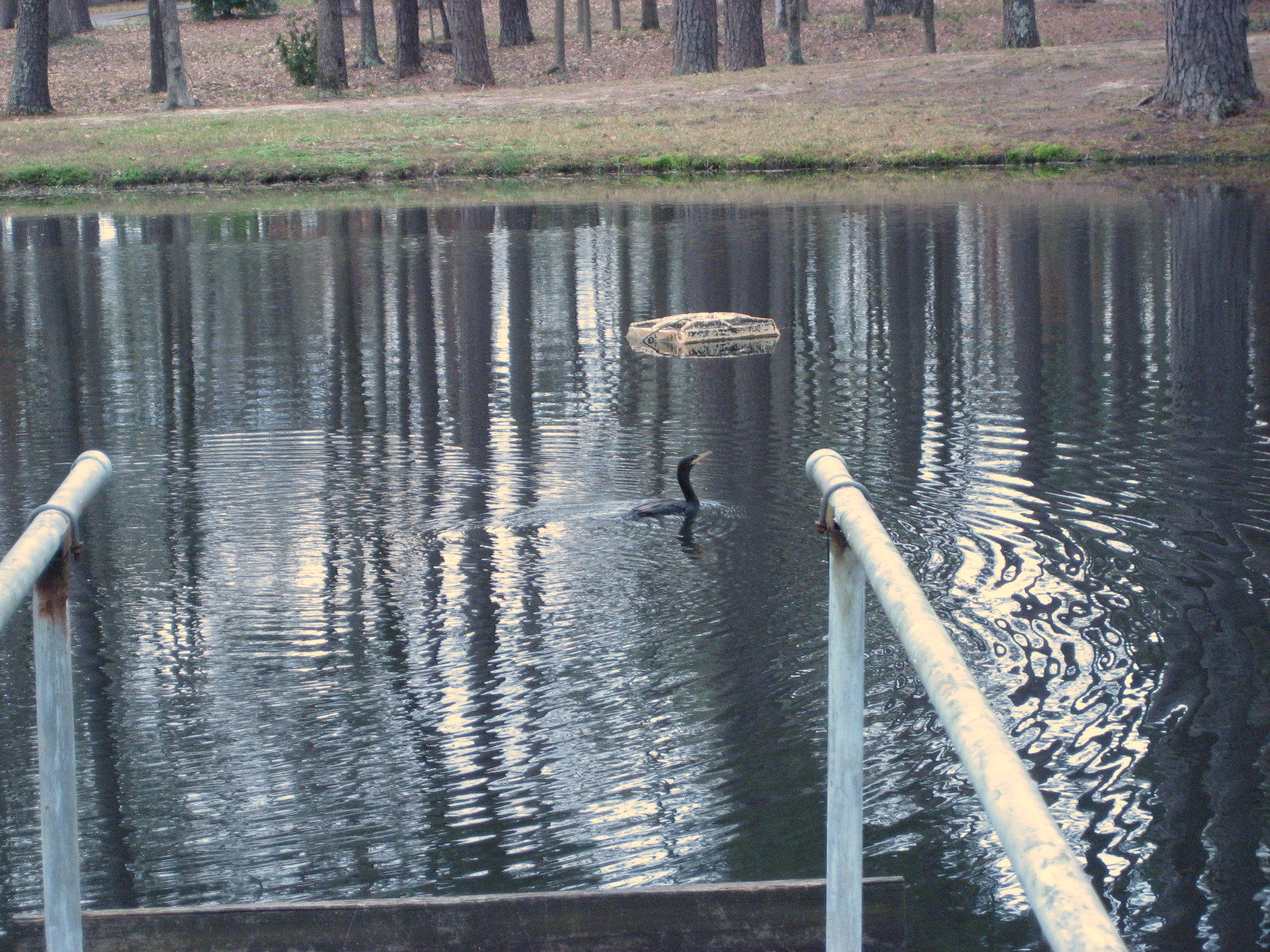
It was unlike anything we had seen before–not an egret or a duck or a goose or anything like that–so we looked it up in the bird book. It\’s an anhinga! These birds are also called \”snakebirds\” or \”water turkeys\” and they are unusual because they swim with their whole bodies under water! Only their long necks and heads show as they paddle around on their webbed feet.

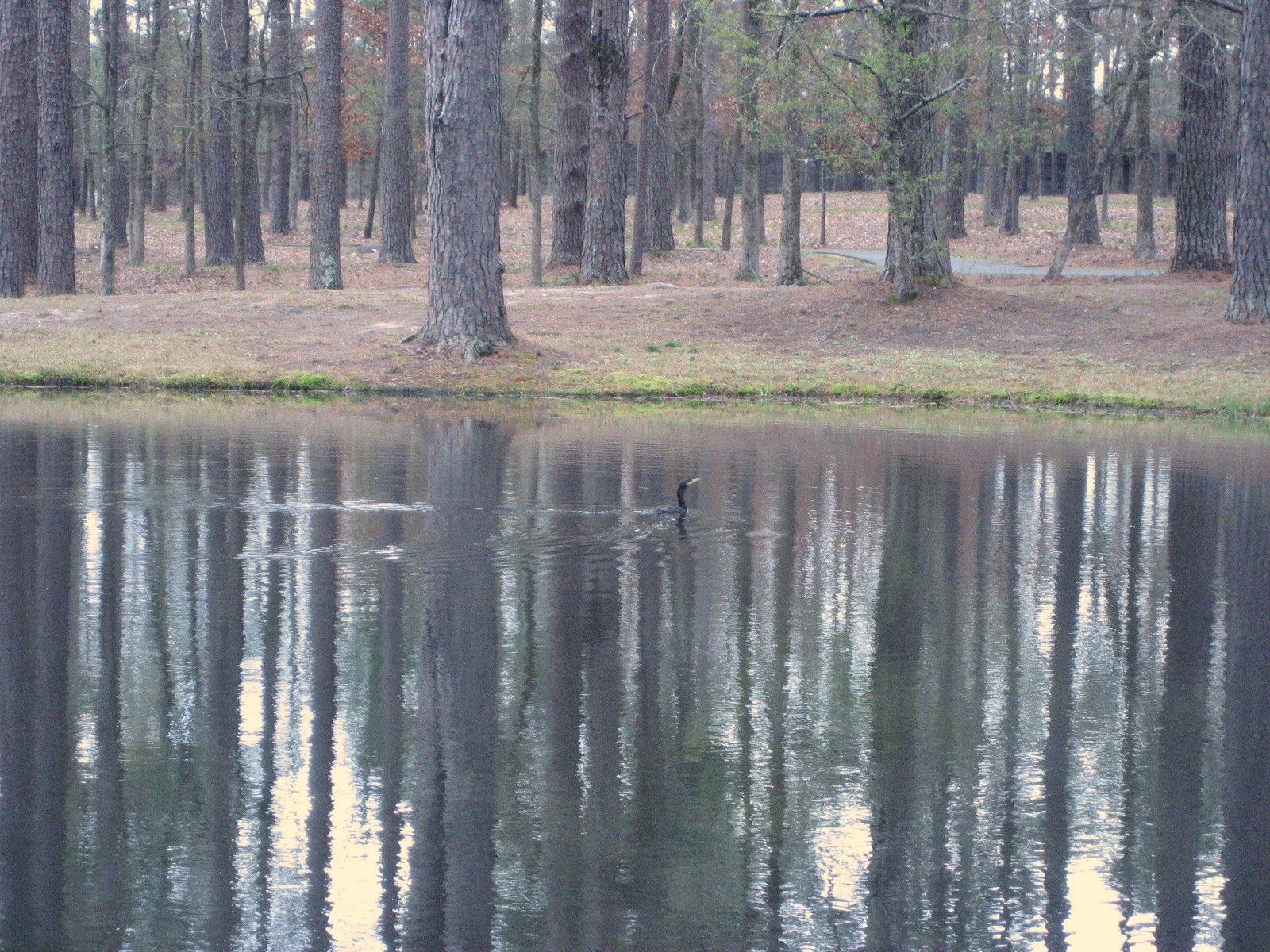
It entered the water gracefully. You can see why it\’s called a snakebird–its long neck looks very snake-like…

and swam around our lake, looking for fish. We read that it spears fish and other water creatures with its long beak. We have a lot of fish in the lake but we didn\’t see the anhinga catch one!
Back on the pier!
Here you can see the anhinga\’s large wings and tail.
We think this anhinga was just passing through, but we were glad to see it and have the opportunity to learn about it. What a wonderful diversity of creatures God has placed on His earth!

First Sunday of Lent, 2013


This text is a selection from Pope Benedict XVI\’s General Audience on Wednesday, February 13, 2013.

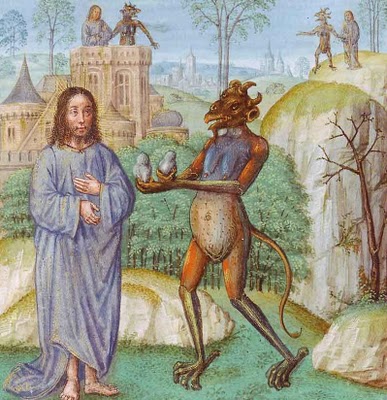
The desert, where Jesus withdrew to, is the place of silence, of poverty, where man is deprived of material support and is placed in front of the fundamental questions of life, where he is pushed towards the essentials in life. For this very reason it becomes easier for him to find God.  But the desert is also a place of death, because where there is no water there is no life, and it is a place of solitude where man feels temptation more intensely. Jesus…takes on our temptations and carries our misery, to conquer evil and open up the path to God, the path of conversion.
 
What is the core of the three temptations that Jesus is subjected to? It is the proposal to exploit God, to use Him for his own interests, for his own glory and success. So, in essence, to put himself in the place of God, removing Him from his own existence and making him seem superfluous. Everyone should then ask: what is the role of God in my life? Is He the Lord, or am I? Overcoming the temptation to place God in submission to oneself and one\’s own interests or to put him in a corner, and converting oneself to the proper order of priorities, giving God the first place, is a journey that every Christian must undergo.
 
In this Lenten season, Christ once again knocks at our door (cf. Rev. 3:20) and invites us to open our minds and hearts to his love and truth. May Jesus\’ example of overcoming temptation inspire us to embrace God\’s will and to see all things in the light of his saving truth.

St. Valentine\’s Day

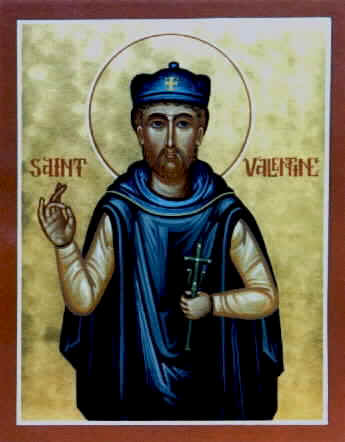
We don\’t really celebrate St. Valentine\’s Day in the Monastery–because it often falls during Lent, for one thing, and for another, we don\’t expect our Beloved to show up on our doorstep with flowers and candy…although it would be something if He did! No, usually His gifts to us come in different forms.

Readers of this blog know many of the sisters here are avid bird-watchers. When we saw these two birds nesting in the space above our carport, we had to get a picture:

What a beautiful reminder of the tender love God has for each of us–on St. Valentine\’s Day and every day. \”My dove is hiding behind the rocks…Let me see your face; let me hear your voice. For your voice is pleasant, and your face is lovely.\” (Song of Songs 2:14)