Sr. Maria Guadalupe\’s Feast Day, 2015

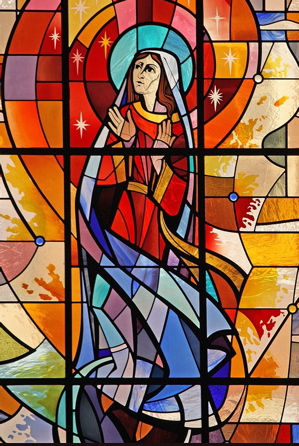
Saturday, December 12, was the feast of Our Lady of Guadalupe. In addition to our beautiful Mass, we celebrated Sr. Maria Guadalupe\’s prioral feast day! The general theme for the day was \”Lord, Make Me An Instrument Of Your Peace\”, since this is her motto.When a nun in our monastery makes solemn profession, she also chooses a phrase that is meaningful to her to be her motto. This can be almost anything. We have a sister whose motto is simply \”Fiat\” (from the Vulgate version of the Bible) and another whose motto is \”Nothing but Yourself, O Lord\” (the famous quotation from St. Thomas Aquinas).

But back to the feast day celebration! We began with a lovely bilingual musical setting of \”Lord, Make Me An Instrument of Your Peace\” and moved on to a series of skits and readings of various kinds that illustrated each petition in the prayer: love, peace, pardon, faith, hope, light, joy, etc.

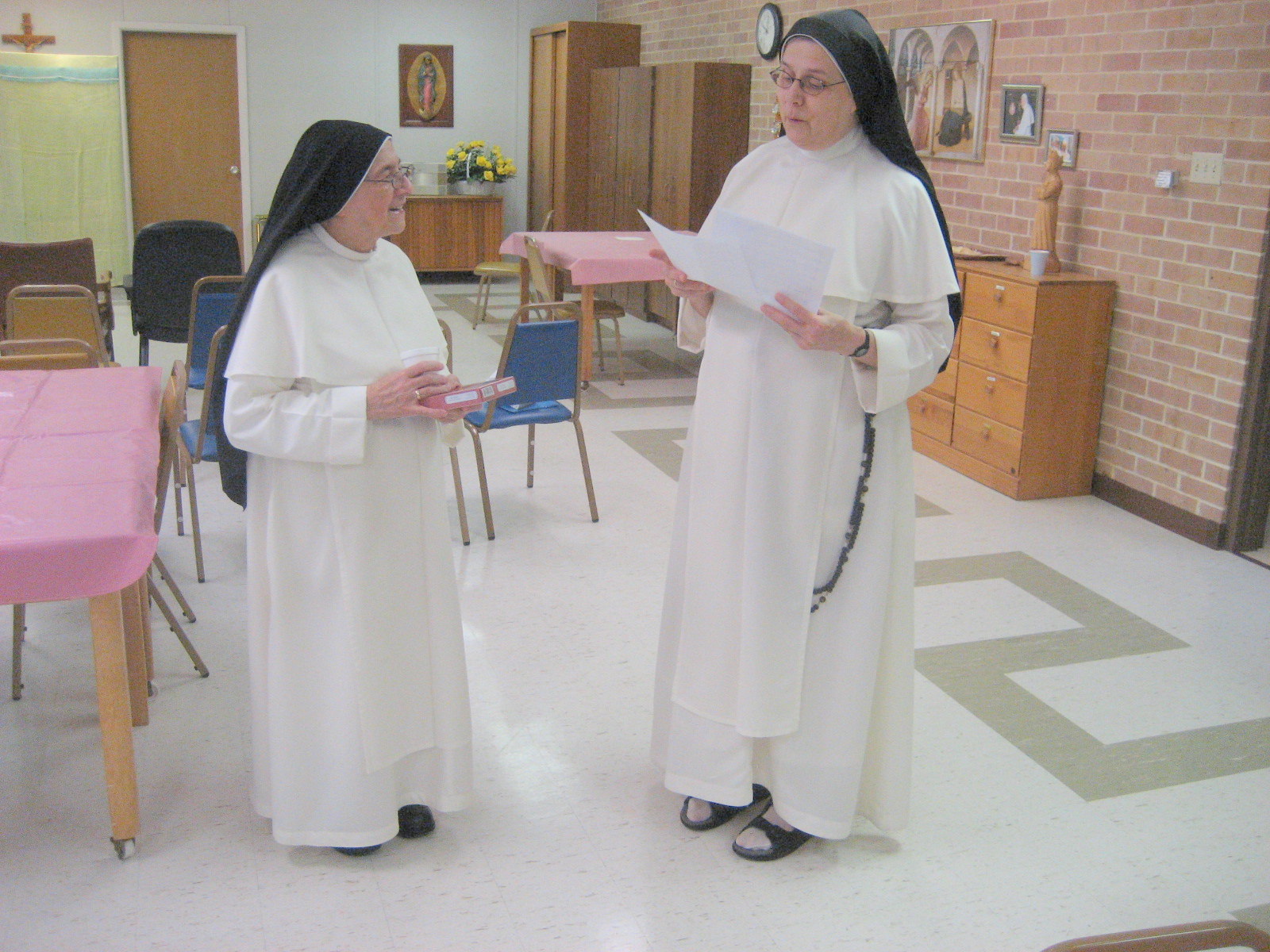
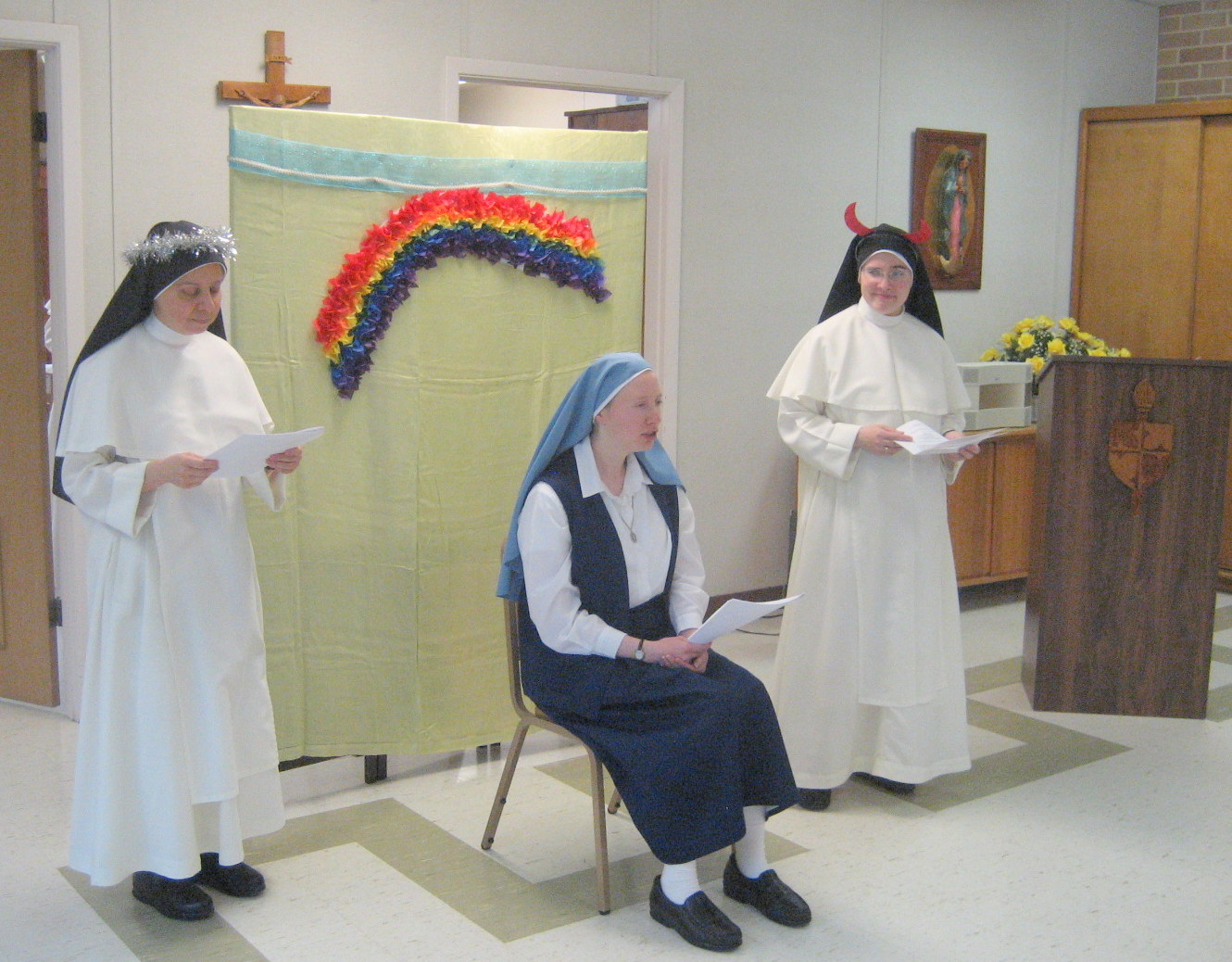
Our subprioress, Sr. Mary Margaret, presents Sr. Maria Guadalupe with our theme 
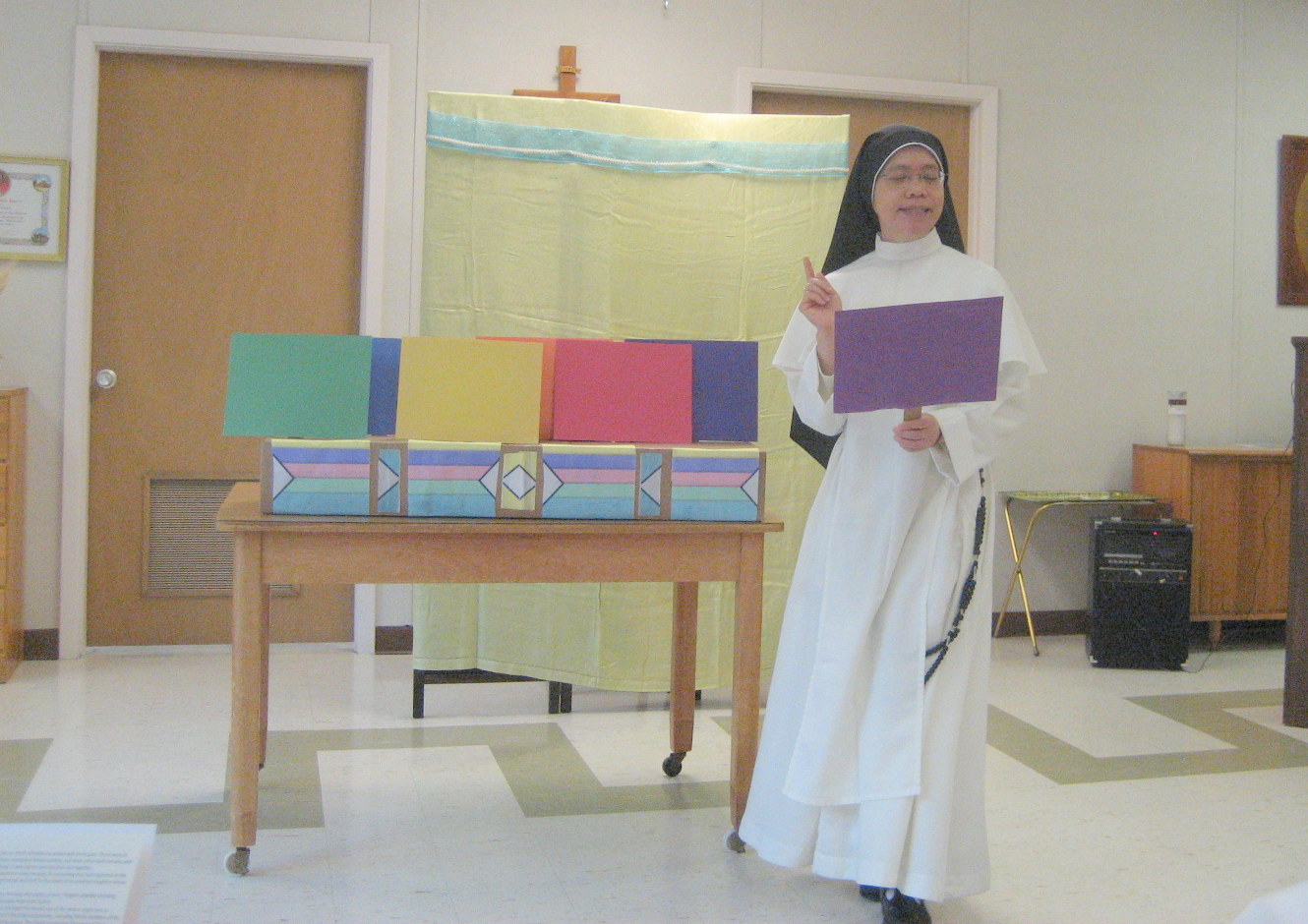
Sr. Mary Christine\’s colorful presentation 

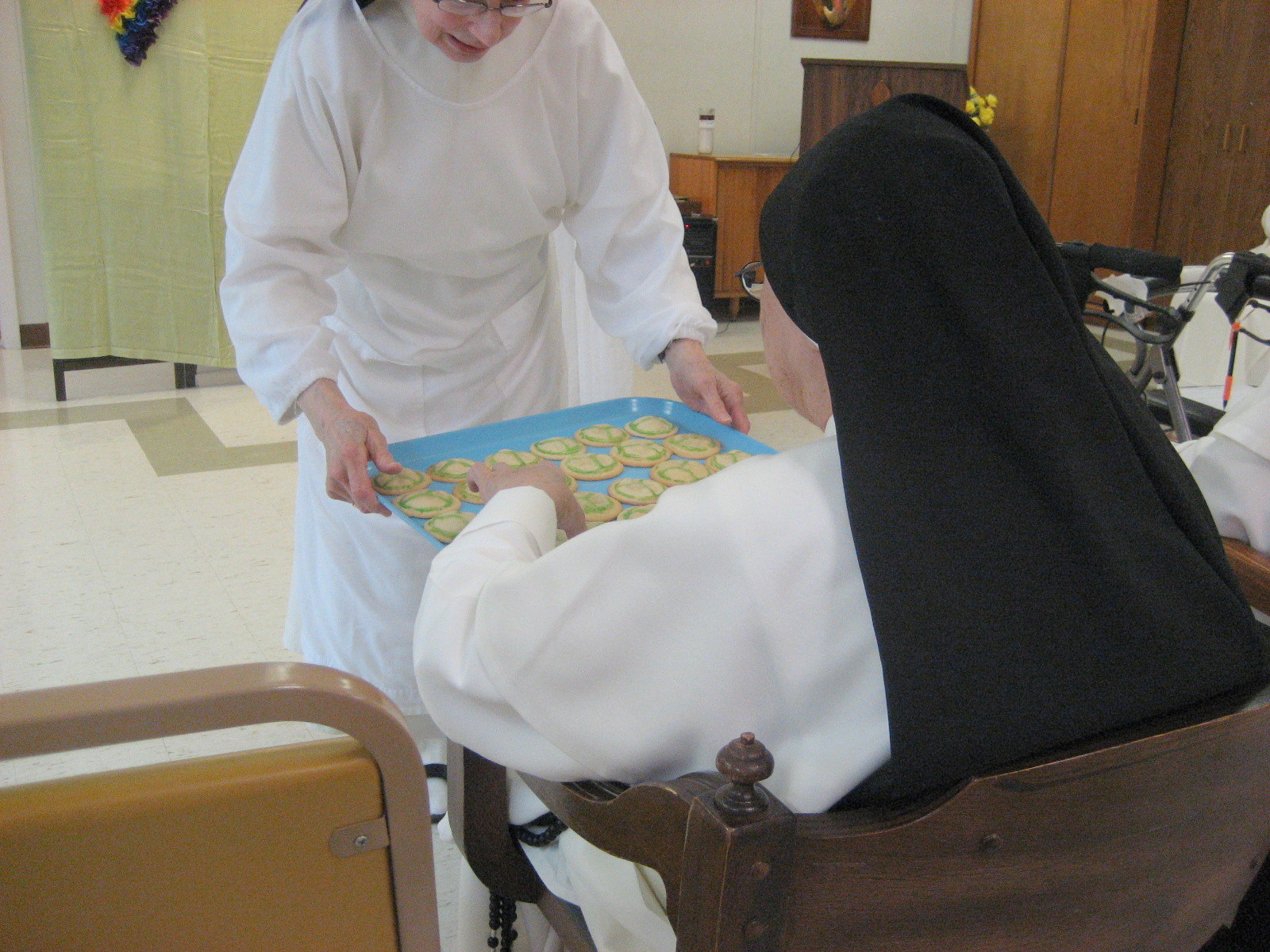
Sr. Maria Cabrini\’s presentation included cookies! Delicious!

Sr. Mary Annunciata narrated a puppet show based on the children\’s book \”No Matter What\”. (Can you see the puppets on top of the screen??)

A battle for Cloe\’s mind and heart between her guardian angel and a devil. Of course, grace triumphed in the end!

In the afternoon, we played a spirited game of \”Texingo\” (which is Texas bingo). A good time was had by all!

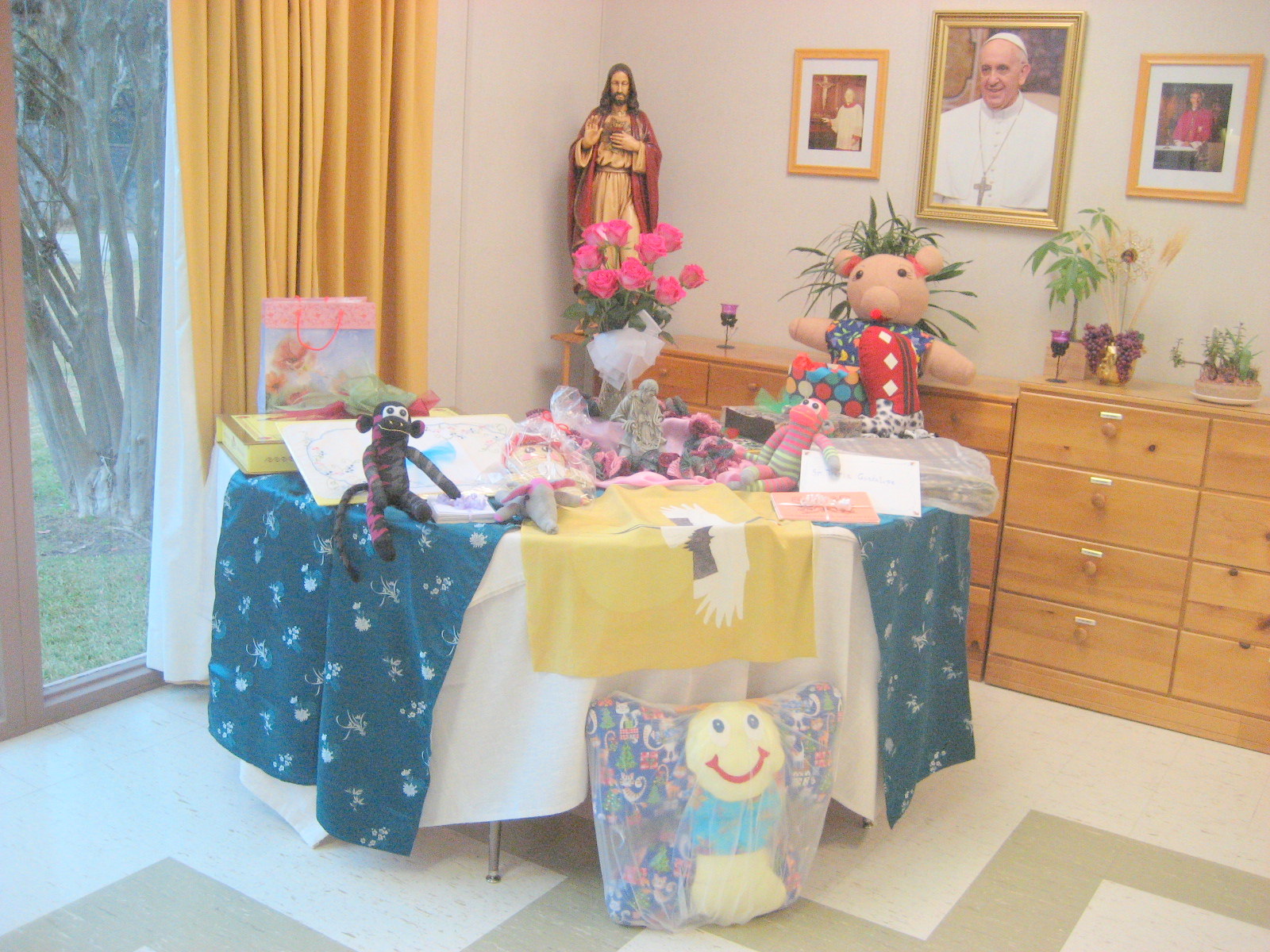
The gift table! We didn\’t have time to open Sr. Maria Guadalupe\’s many gifts yet, so the celebration continues!

We ended the day with a movie that highlighted some of the virtues we were trying to both show in our presentations and put into practice in our lives. It was actually very enjoyable–just as virtue is often enjoyable when you live it! We all had a great day–and we think Sr. Maria Guadalupe did, too!
Almost halfway through Advent…

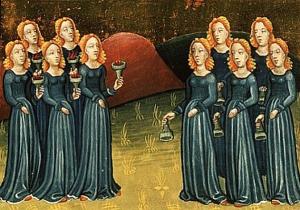
We\’re approaching the halfway point of Advent and some of us may be feeling like the foolish virgins pictured above…the oil has run out, and there seems to be no hope of getting more in time for the Bridegroom\’s arrival. It\’s easy to get like this. Advent is a relatively short season, and it\’s difficult to carve out time to wait patiently, to meditate on the Lord\’s coming. It can even become a prime moment for a really intense bout of self-pity. Here I am, trying to keep a good Advent while the world celebrates Christmas from Thanksgiving (or Halloween!) onward. Here I am, trying to share my experience of Advent with the world and no one gets it. Here I am, meditating on the coming of Christ incarnate in our world (not to mention meditating on the four last things!) and all around me it\’s like a big happy party that I haven\’t been invited to. Poor me!
These problems are microscopic compared to all the truly horrific things happening in the world…shootings, refugee crises, world hunger, terrorism. But at the same time they are still meaningful. Just because something is incredibly trivial doesn\’t mean it hurts less. Sometimes it\’s the little things that hurt the most. The thing to remember is that these hurts and slights and pains are not the end of the story. We may not be able to change the world, but we can change ourselves by cooperating and accepting and being open to God\’s grace. There is still time, this Advent season, to buy more oil and prepare for the coming of Christ. There is still time to awaken from the drowsiness of self-pity and unreasonable depression and go out to meet Christ with joy. There is still time to help others, to spread the Good News through our small and everyday acts of love, to pray for all those people suffering so terribly in so many parts of this world and to support them through prayers and material donations, etc. There is still time! We are only halfway through Advent…

The Four Last Things: Judgment

The second of the Four Last Things we are considering this Advent season is Judgment. Here we will discuss the Last Judgment, which will come at the end of time, and also the particular judgment, which happens to each of us at the moment of our death. The Catechism of the Catholic Church states, \”Every man receives his eternal recompense in his immortal soul from the moment of his death in a particular judgment by Christ, the judge of the living and the dead.\” (CCC 1051) When a person dies, Christ immediately judges him or her and assigns a place in Hell, Heaven, or Purgatory. Of course if you end up in Purgatory, you know you will eventually get to heaven. 

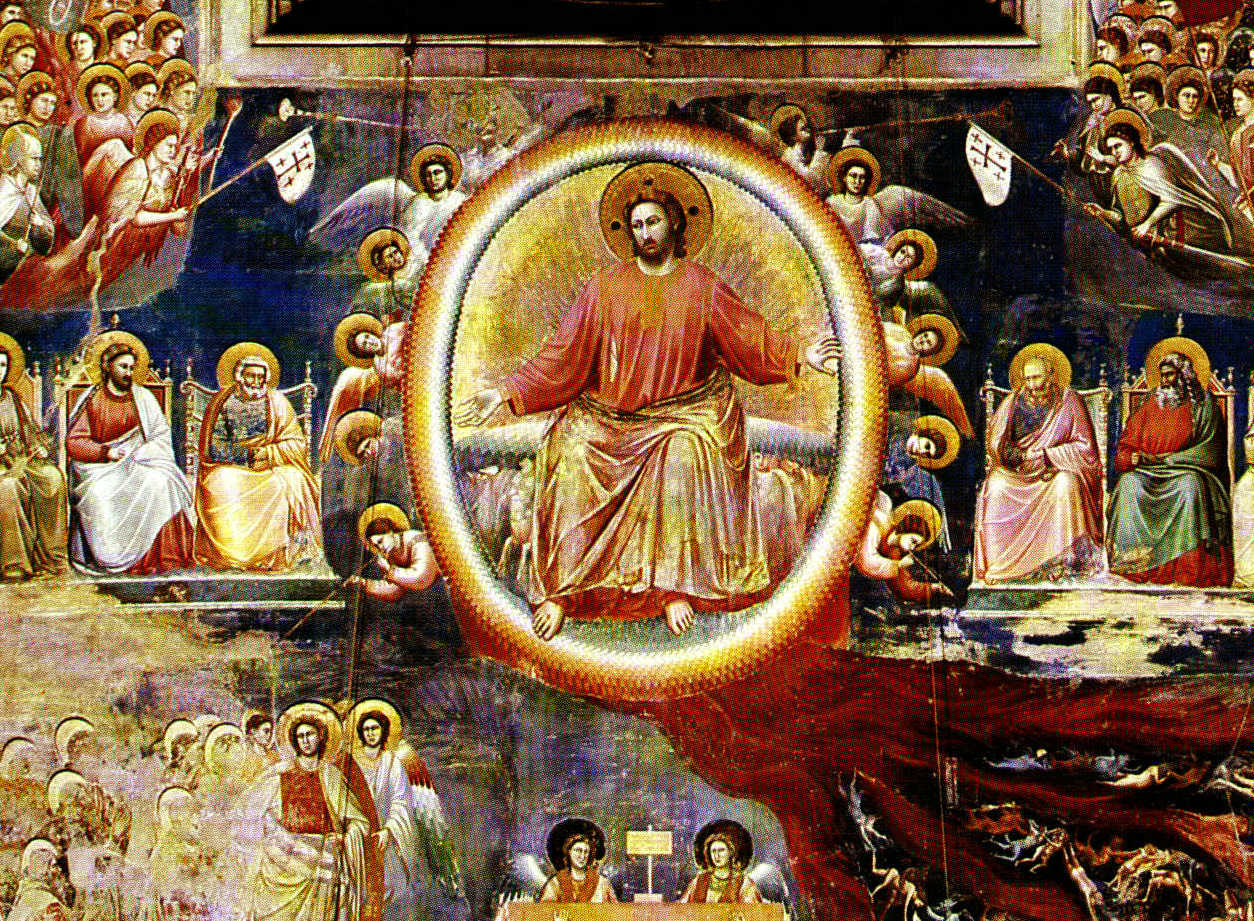
The Last Judgment is something else entirely. First comes the general resurrection–when all the dead rise from the grave–followed by Christ coming in glory. The Gospel of Matthew tells us, \”Before him will be gathered all the nations, and he will separate them one from another as a shepherd separates the sheep from the goats, and he will place the sheep at his right hand, but the goats at his left…And they will go away into eternal punishment, but the righteous into eternal life.\” (Matthew 25:32, 46) It\’s an extremely frightening concept…but a comforting one, as well. The Catechism tells us, \”We shall know the ultimate meaning of the whole work of creation and of the entire economy of salvation and understand the marvelous ways by which his Providence led everything towards its final end. The Last Judgment will reveal that God\’s justice triumphs over all the injustices committed by his creatures and that God\’s love is stronger than death.\” (CCC 1040)
We are often critical of those who judge others (of course we overlook the fact that in criticizing we are judging them too!). Add to this Pope Francis\’ repeated statements about looking to God\’s mercy rather than His judgment, and the whole concept gets even more confusing. How does God\’s judgment happen, anyway? The best we can do is simply trust in God–His mercy and His judgment–and do our best to choose Him now so that we may be happy with Him forever. 

Immaculate Conception, 2015

Today is the solemnity of the Immaculate Conception. Under this title, Mary is the patroness of the United States and also of our diocese of Tyler, TX. This also happens to be the day the Southern Dominican Province was founded, back in 1979. And, it\’s the beginning of the Jubilee Year of Mercy announced by Pope Francis. It\’s a holy day of obligation, too, so hopefully you will go or have already gone to Mass!
Mary was conceived without sin–that is, she had no trace of the original sin all the rest of us are born with–but that doesn\’t mean she didn\’t have free will. She had the possibility to choose the wrong things, but she never did. Many times we recognize the difference between a good thing to do and an evil thing to do–these things are seldom gray–and for whatever reason we choose the evil. Let us pray today that through the intercession of Mary Immaculate we may always choose the good which will bring us closer to God.

The Four Last Things: Death

Advent is a season to prepare for the great solemnity of Christmas. But it has also been a traditional time to consider the \”four last things\”…death, judgment, hell, and heaven. We would like to consider these four last things during this Advent season. So, without further ado, we bring you the first of these: death.
The Catechism of the Catholic Church states that 1) death is the end of earthly life; 2) death is a consequence of sin; but also 3) death is transformed by Christ, Who also suffered death. (CCC 1007-1009) Christ has given death a positive meaning. \”What is essentially new about Christian death is this: through Baptism, the Christian has already \’died with Christ\’ sacramentally, in order to live a new life; and if we die in Christ\’s grace, physical death completes this \’dying with Christ\’ and so completes our incorporation into his redeeming act.\” (CCC 1010)  As St. Therese of Lisieux said, \”I am not dying; I am entering life.\” (Last Conversations)
Ray Bradbury wrote a novel called Death Is A Lonely Business, and this title probably sums up the way most of us view death. But not so long ago people kept vigil with the dying, offering prayers and other consolations, encouraging them as they faced the temptations that afflict the dying in particular (represented by demons in the woodcut above). We still keep vigils with our dying sisters here at the monastery, praying, singing the \”Salve Regina\” and other hymns, and being a quiet loving presence for them as they make this transition. But even if one is alone at the moment of death, as believers we know we are surrounded by hosts of saints and angels who are there to assist us, to guide us through this passage. It is helpful–and not morbid!–to pray for the grace of a \”happy death\”, that is, a calm, peaceful death, in which we can make our last surrender to God. We pray for this every time we pray the Hail Mary–\”Pray for us sinners, now and at the hour of our death\”. We can also pray to St. Joseph, the husband of Mary and foster father of Jesus, who is the patron of a happy death. In the end, death is not the end. There is more to come!
St. Paul wrote to Timothy, \”This saying is trustworthy. If we have died with him, we shall also live with him.\” (2 Timothy 2:11) Amen!