Rest in Peace, Sr. Mary Sybillina


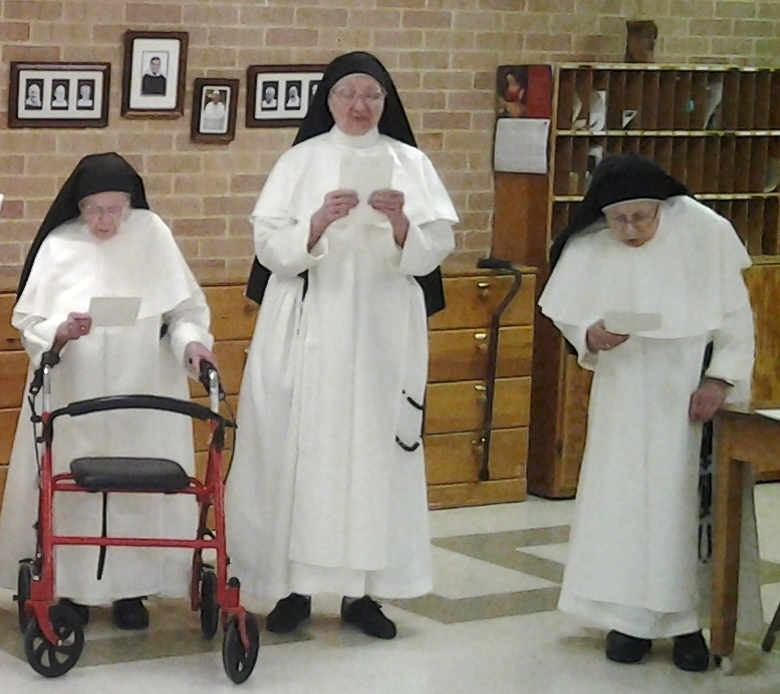
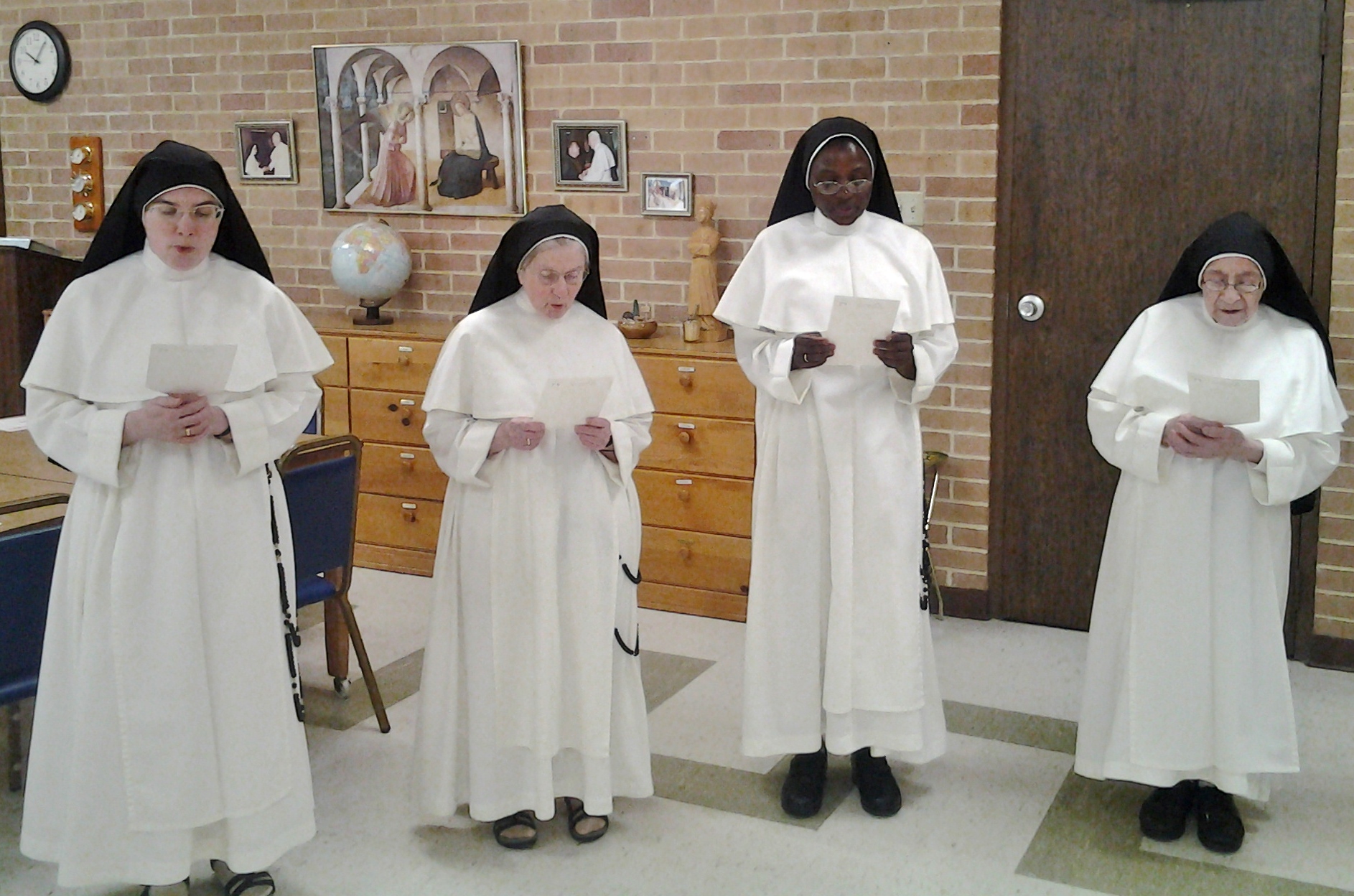
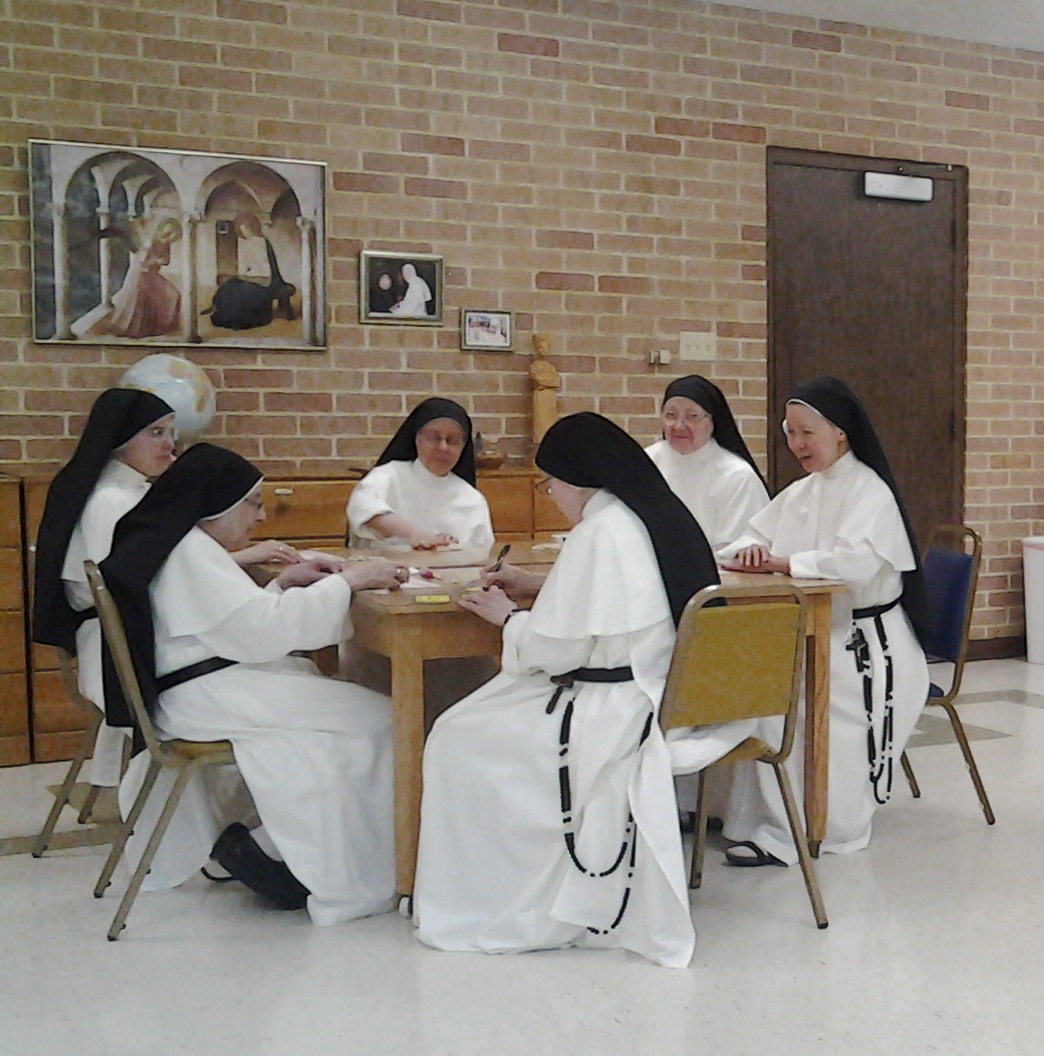
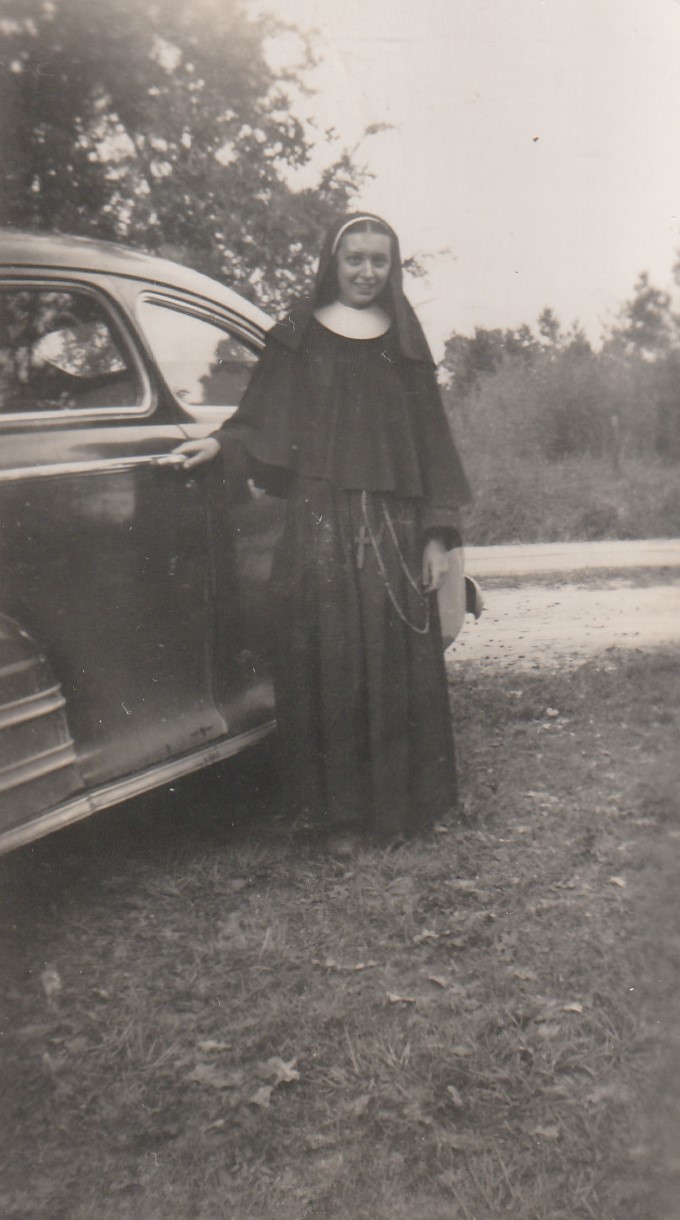
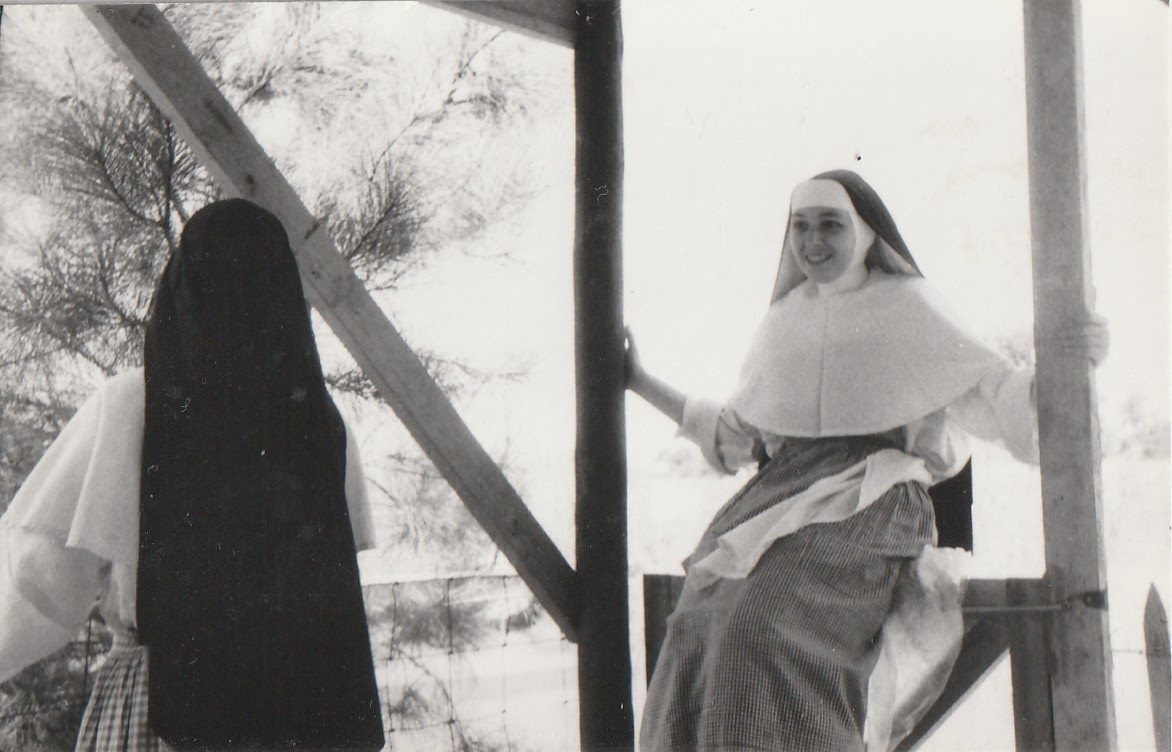
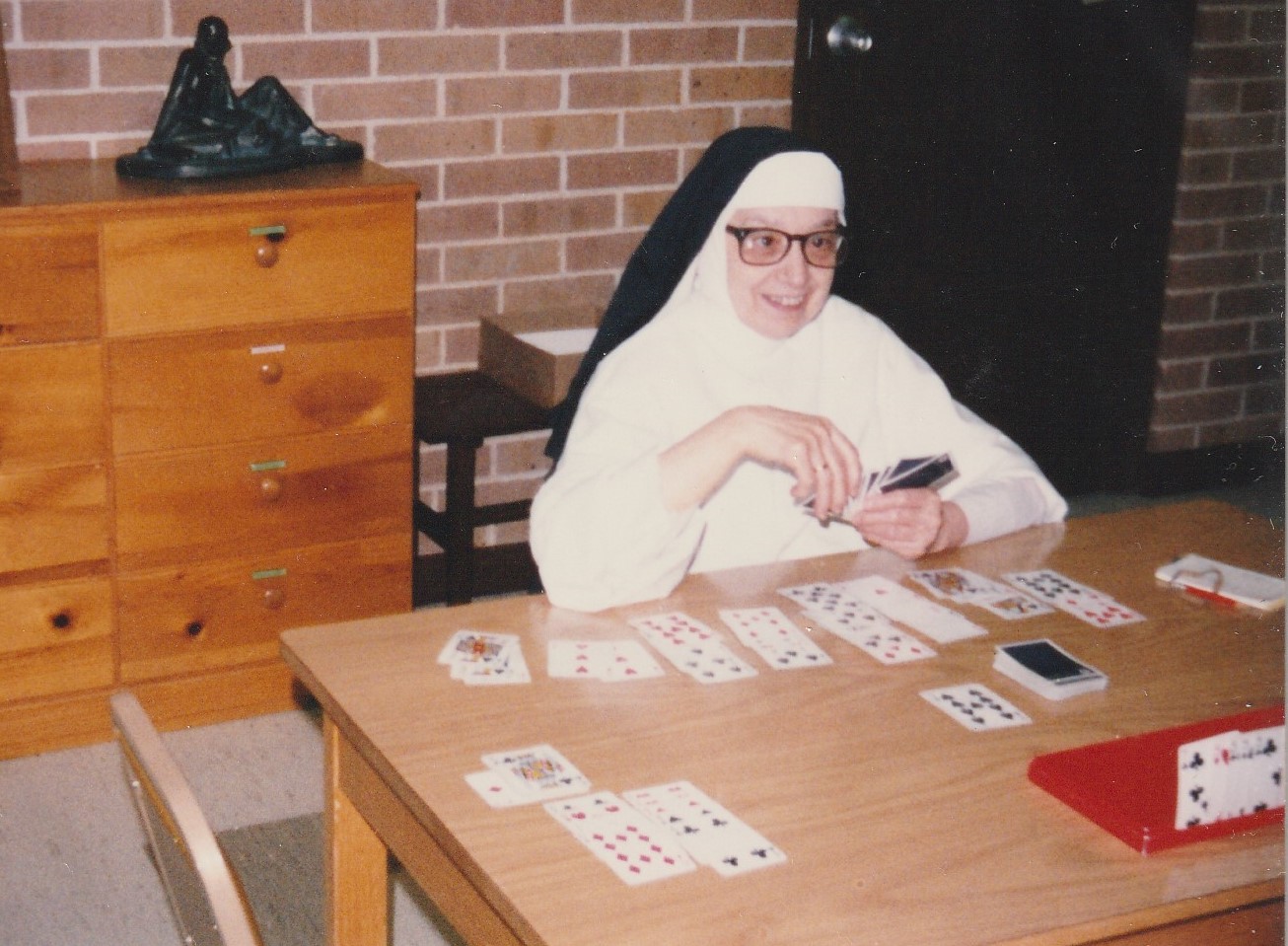
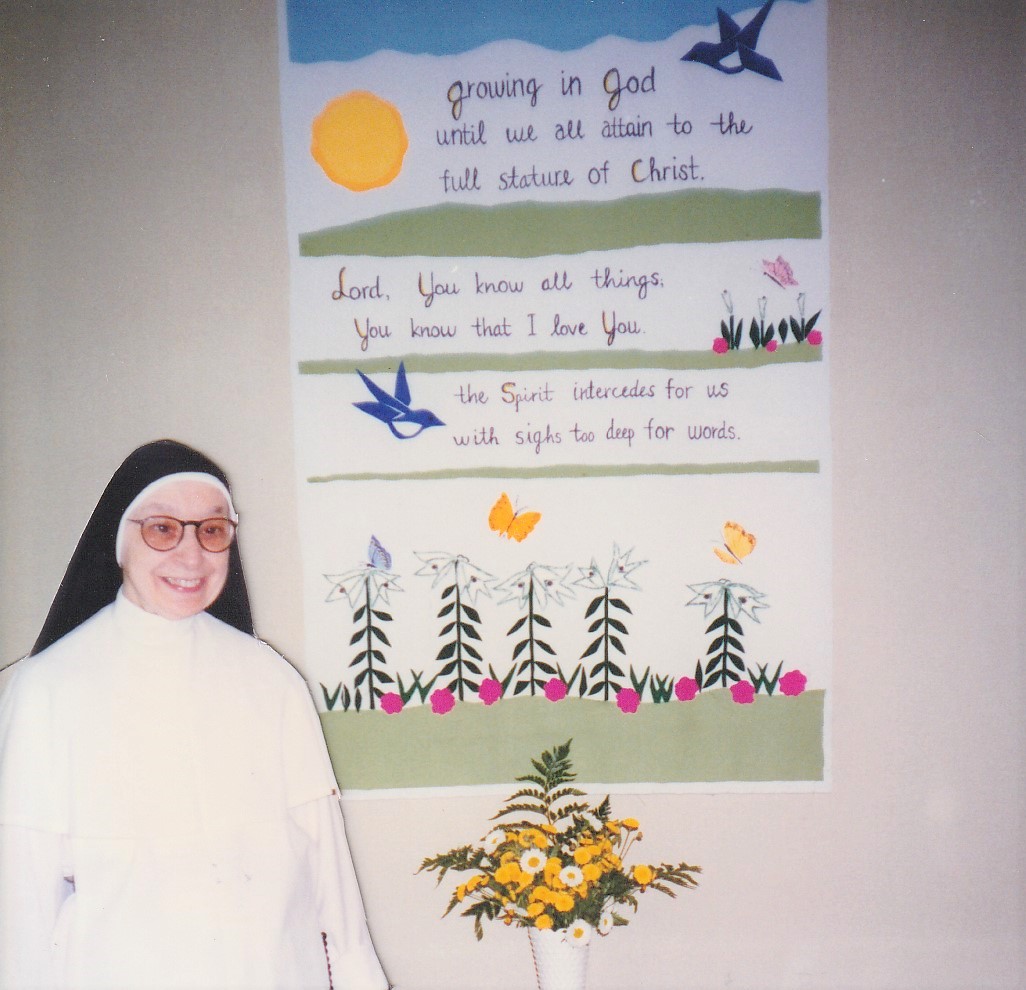
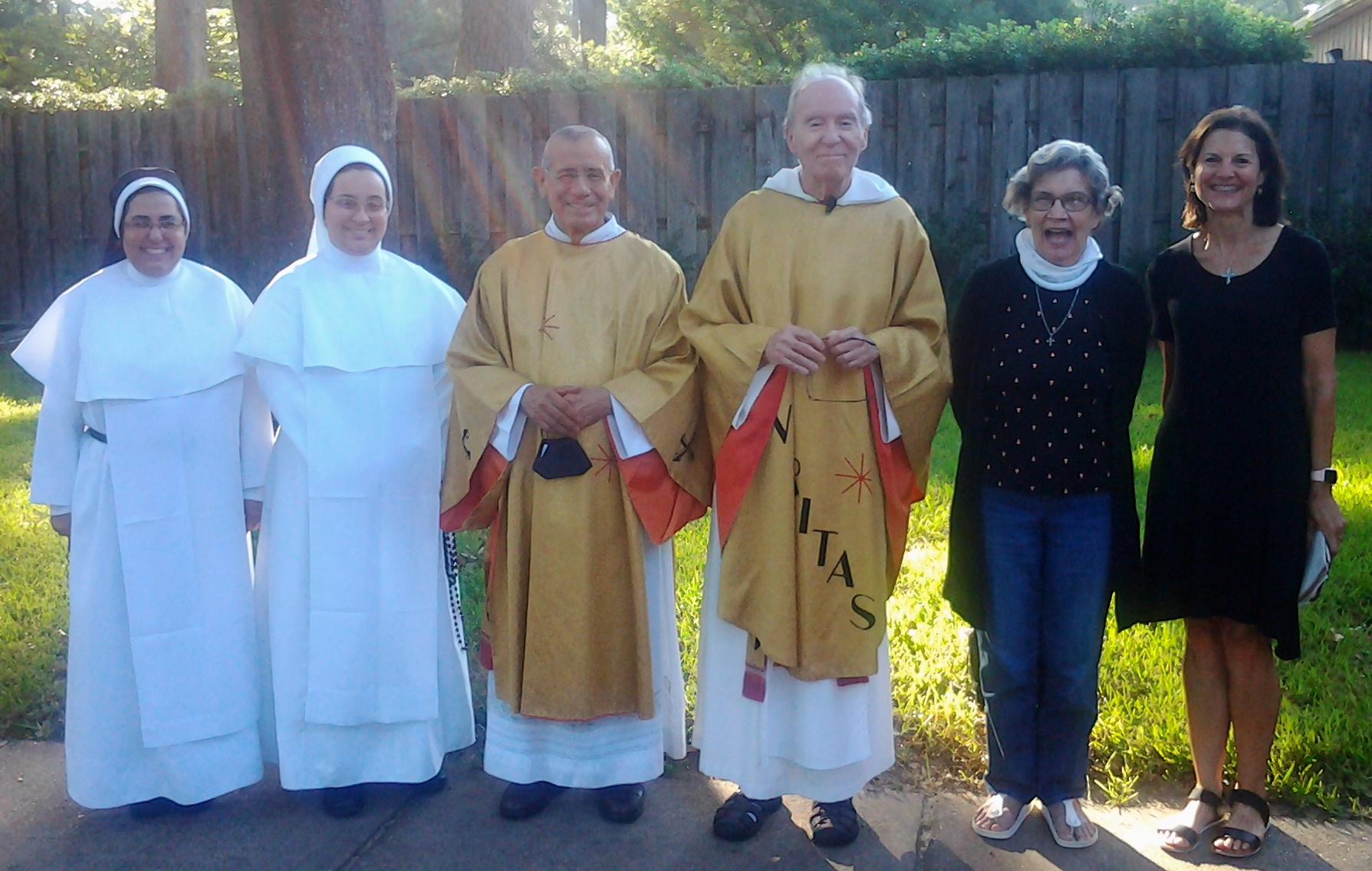
Our oldest sister and last foundress, Sister Mary Sybillina of the Crucifixion, O.P., died yesterday afternoon at about 5 PM. Sister was 93 years old. She had been a member of our Lufkin monastery for 75 years. Sister entered the Monastery of the Blessed Sacrament in Detroit, MI (now relocated to Farmington Hills, MI) and two weeks later left that monastery to come to settle a new foundation here in Lufkin. We hope to post more about Sister in the next few days. Due to COVID-19, the funeral will be private.
Eternal rest grant unto her, O Lord,
and let perpetual light shine upon her. Amen.

Solace of Migrants (Solacium Migrantium)

You shall answer and say before the Lord your God, ‘My father was a wandering Aramean, and he went down to Egypt and sojourned there, few in number… (Deuteronomy 26:5)

People have always been migrants, for one reason or another. Although we manage to settle in one place for a time, we usually end up on the move again. In the United States, this is usually a voluntary choice: a decision to go elsewhere to find a better job, good weather, a safer neighborhood. But you can look at any newspaper or Internet news site to see that Americans are privileged. The majority of the world\’s migrants are on the move because they have to go. It’s a question of life or death. They are getting away from religious fanatics, drug cartels, oppression by the government, and general lawlessness. They leave home, often with only the clothes on their backs, and they journey to an unknown destination.
When you read the Bible, you find that it is primarily about people moving around. Adam and Eve were driven out of the Garden. Abraham was called to live in a faraway country called Canaan. Moses led the Israelites out of Egyptian slavery. During the time of Jeremiah the prophet, the people were systematically rounded up and taken by force to Babylon. And, of course, the story most of us know best: the journey of Mary and Joseph away from their home in Nazareth to be enrolled in the census in Bethlehem, and then their flight into Egypt to escape Herod\’s murderous plans.
Pope Francis has added this title, Solace of Migrants, to the Litany of Loreto in order to remind us. Not just of the past, although that is essential. But we must also remember that nothing in life is ever stable. Even a hurricane or tornado can force people to migrate. They see their homes and lives completely ruined, and all they can do is try to start over.
A Christian writer once suggested that a creed for Christians that begins, “My father was a wandering Aramean…” might be more meaningful than the creeds we recite during Mass on Sundays. Although we don’t think this should be an actual practice, she makes a good point. All of us are, in a sense, wandering Arameans. We are separated from God, and we spend our lives searching for Him. We are strangers and sojourners on this earth, and our true home is in Heaven.
Holy Mary, Solace of Migrants, pray for us!

Mater spei (Mother of Hope)

Our Lady of Hope as she appeared in Pontmain, France, 1871
The title “Mother of Hope” is not entirely new. Like \”Mater misericordiae\”, Our Lady is also addressed in reference to this title in the Salve Regina: et spes nostra salve, hail to our hope. Additionally, there were small confraternities, primarily in Europe, that invoked Mary as “Mother of Hope”. However, it was not until 1871 that the title really caught on, so to speak.
In January of 1871, France was fighting the Prussian army and things were not going well. At Pontmain, the Prussians were at the edge of the city. A young boy went out to finish his chores on the family farm and, to his astonishment, saw a beautiful Lady hovering in the air. His brother also saw it. They rushed to eat their supper, then went back outside. The apparition was still there. A religious from the school brought two young girls, who also saw the vision of Mary. Soon, word spread through the town: the bad news was that the Prussians were closer than ever. The good news was that more and more people were coming to be near the visionaries, to pray the rosary and sing and recite other prayers, although they could see nothing. At last, something like a scroll unrolled itself, and the children read, “But pray, my children…my Son allows himself to be touched.” The vision disappeared at 9 PM. It had been visible–to the children, anyway–for three hours.
The Prussians never attacked Pontmain, The next day, the frightened soldiers reported to their commanding officers that an “invisible Madonna” was blocking their way. They returned home, and the war finally ended. It was impossible, unbelievable, but it happened. This apparition, under the title Our Lady of Hope, was accepted by the Church in 1875, and a great basilica in honor of Our Lady of Hope was built there.
So, how does this (probably) little-known apparition come into our lives today?
We need to be reminded that Mary is our Mother of Hope. Our lives in this modern world of serious political division, racial unrest, and COVID-19 all remind us in the most forceful way: we need hope, and Mary is our Mother of Hope. We have to hope for better days to come. As Charles Peguy wrote in his long poem, “The Portico of the Mystery of the Second Virtue”:
The faith that I love best, God said, is hope…
Hope, said God, that does surprise me.
Even me…
It is faith that is easy and not believing that would be impossible. It is charity that is easy and not loving that would be impossible. But  it is hoping that is difficult.
And the easy way and the inclination is toward despair and that is the great temptation.
 
Holy Mary, Mater spei, Mother of Hope, pray for us!

Mater misericordiae (Mother of Mercy)

The title “Mother of Mercy” is familiar to most of us from the well-known Salve Regina, in which Mary is addressed as our Queen and Mother of Mercy.
Note that this is the chant used by Dominicans, and is completely different from the Gregorian version often found in parish hymnals, etc.
Why do we call Mary our “mother of mercy”? It is a fitting title, because she was completely human, and yet born without Original Sin, thanks to the foreseen merits of her son Jesus. Mary could see all the flaws and faults of the rest of humanity, and look upon these with mercy and compassion, not because she had personal knowledge of these things, but because her sinless nature gave her the privilege Adam and Eve lost when they ate the forbidden fruit in the Garden of Eden: she always knew the right way to act, and she did so. Her will was perfectly aligned with the will of God.  Just as God has mercy on all His children, always drawing them to repentance when they sin, Mary too is merciful. She is not God’s equal, but she is the most powerful intercessor with God that we have. Thus, in this time when many would rather pursue what they believe to be justice rather than show mercy toward their fellow flawed human beings, Pope Francis made a wise decision in adding this petition to the Litany of Loreto.
Mary, Mother of Mercy, pray for us!

Mary’s Litany Expanded


On June 20, the world received the news that Pope Francis has added three new invocations to the Litany of Loreto. This litany is a long series of titles praising the Virgin Mary, and asking for her prayers in return. Each title is followed by the plea, “Pray for us.” So, for example, the litany proper begins with “Holy Mary,” to which we respond, “Pray for us.”

This Litany probably dates back to the 15th or 16th century. In the Dominican Order, it is a long-standing custom to sing this litany every Saturday–Saturday being the day of the week which is usually dedicated to Mary. In our monastery, we sing the litany during Compline. And we are really serious about it! One year when Christmas fell on a Saturday, a young sister thought maybe the prioress would dispense the community from this prayer. After all, it had been a long day and everyone was tired! But, no. We sing the litany every Saturday (except Holy Saturday, of course) and every day during May while we make a solemn procession to our statue of Mary, Our Lady of the Pines.
Although the litany had a general form from the beginning, it has become customary for a pope to add a title to the litany if he feels it necessary. For example, Pope Leo XIII added both the title “Queen Conceived without Original Sin” (1883) and “Mother of Good Counsel” (1903). Pope Benedict XV added the title “Queen of Peace” in 1917, when war ravaged Europe. Pope John Paul added two titles during his pontificate as well: “Mother of the Church” in 1980, and “Queen of Families” in 1995. Now, Pope Francis has given us three more: Mother of Mercy, Mother of Hope, and Solace of Migrants. Pope Francis seems to be the first Pope to add three titles at once. But, as we all know, we live in difficult times, and the signs of these times encourage us to look to Mary for mercy, for hope, and for solace, no matter where we are in life. .
During the month of May we had a series of commentaries on the more poetic titles of Mary, which are mostly taken from the Old Testament. Now, we would like to offer some brief comments on these three new titles. Keep watching this space to see more!

Raffle-mania!

Our posts lately have been few and far between…but that’s because our annual summer raffle is in full swing! We have received a truly overwhelming response, and we are humbled that so many people are willing to send a small donation to the nuns during this time.

We mailed the raffle tickets to everyone on our “Monastery Bells” list, but if you would like to join us, please do! Just send your name and phone number (so we can call you if you win) here. You don\’t have to send a donation, although we are grateful if you do!
Speaking of which, we hope to get our new website up soon, and it will have a place where you can donate online. Many have asked us to bring this back, and we look forward to doing it!
Without further ado–the prizes:
All of these lovely items were made by our sisters in their limited free time. And although we only have nine prizes pictured here, you never know…we may have some surprises coming up!
The drawing will be August 15, Solemnity of the Assumption of Mary.
God bless you, and may you enjoy good fortune!

Nuns of Many Hats


Warm hats make warm hearts filled with gratitude!


There\’s an expression in English used to describe someone who has many different jobs or responsibilities. “She works full time, takes care of her husband and children, and volunteers at church–she’s a woman who wears many hats!” In the same way, cloistered nuns wear many “hats\, in a manner of speaking. 

Our primary work is of course prayer, and specifically, praying the entire Liturgy of the Hours. To this we add a community rosary, recitation of the penitential psalms for the dead, a period of adoration of the Blessed Sacrament for each sister (which includes an extra time of adoration during evening recreation, when your turn comes around) and two periods of meditation each day. Oh, and of course, the community Mass every morning. That\’s a lot of prayers!
In between prayers, we manage to squeeze in work time in our various departments. Sisters pack altar breads, write thank-you notes to benefactors, send both prayer enrollment cards and our special three-part folders, keep our budget balanced, cook meals, clean, attend to visitors, work on the website and update the blog, accompany the men who have come to do maintenance of any kind inside the monastery. And, each sister carves out a place in the day to study, because study is one of the main pillars of Dominican spirituality. And in addition to all this, we have two periods of recreation (one is optional) and a siesta time. How does it all get done?
Of course, all our strength and ability to do these many works comes from God–which is why we make prayer the the center point of our lives. Everything we do is fueled by our prayer, our openness to God and the graces He wants to give us each day. When we are really trying to cooperate with His grace, even the rough patches go more smoothly.
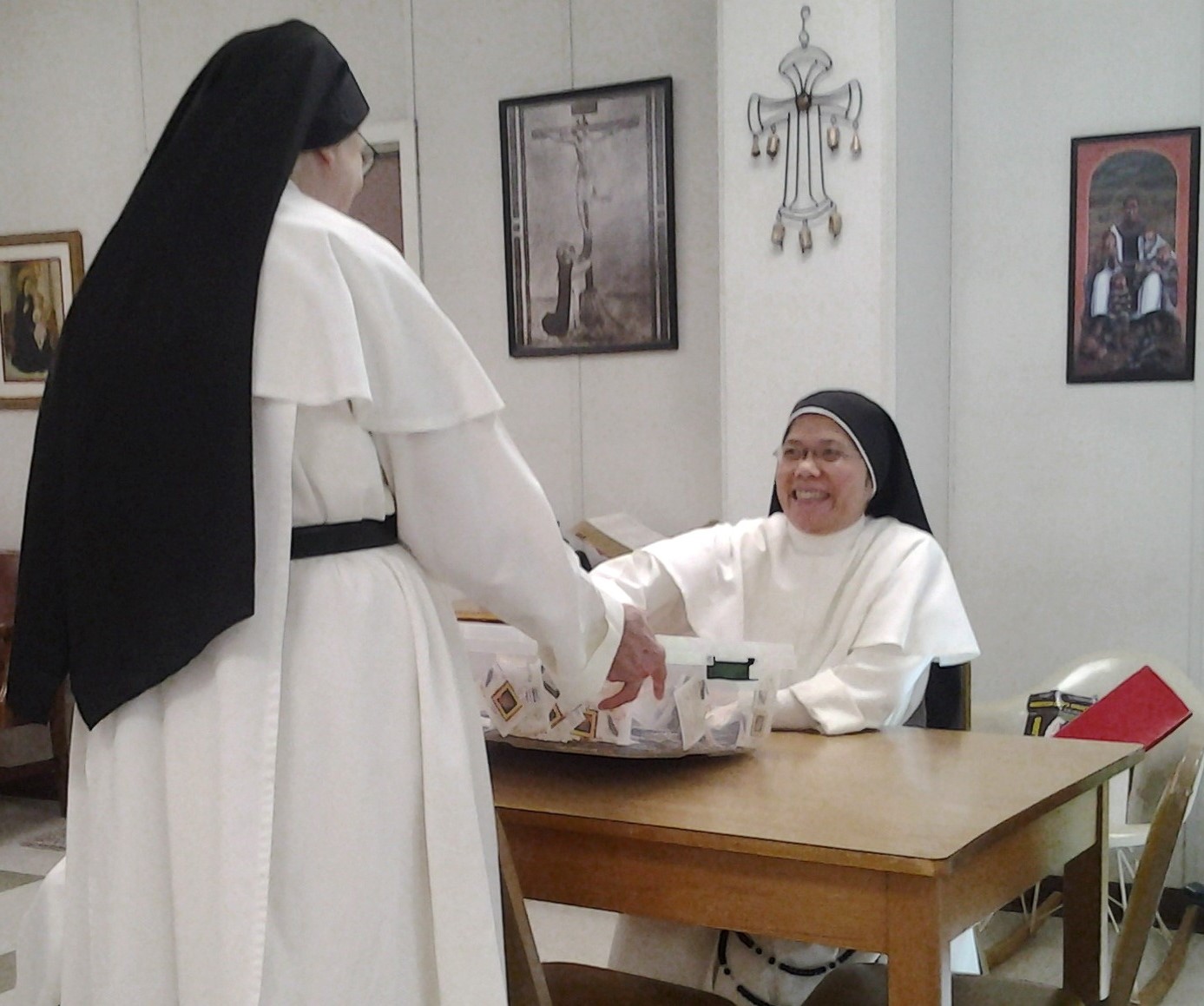
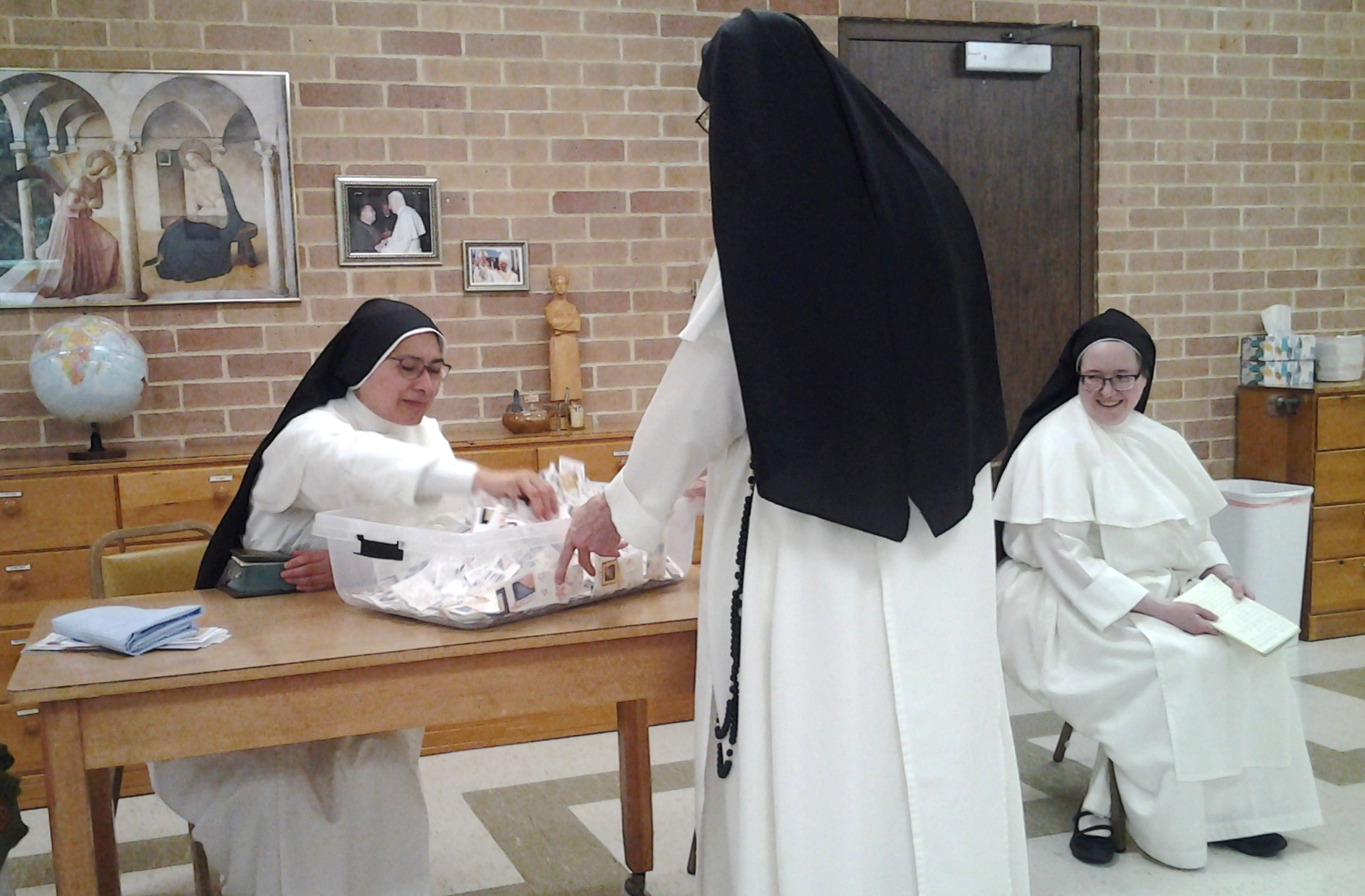
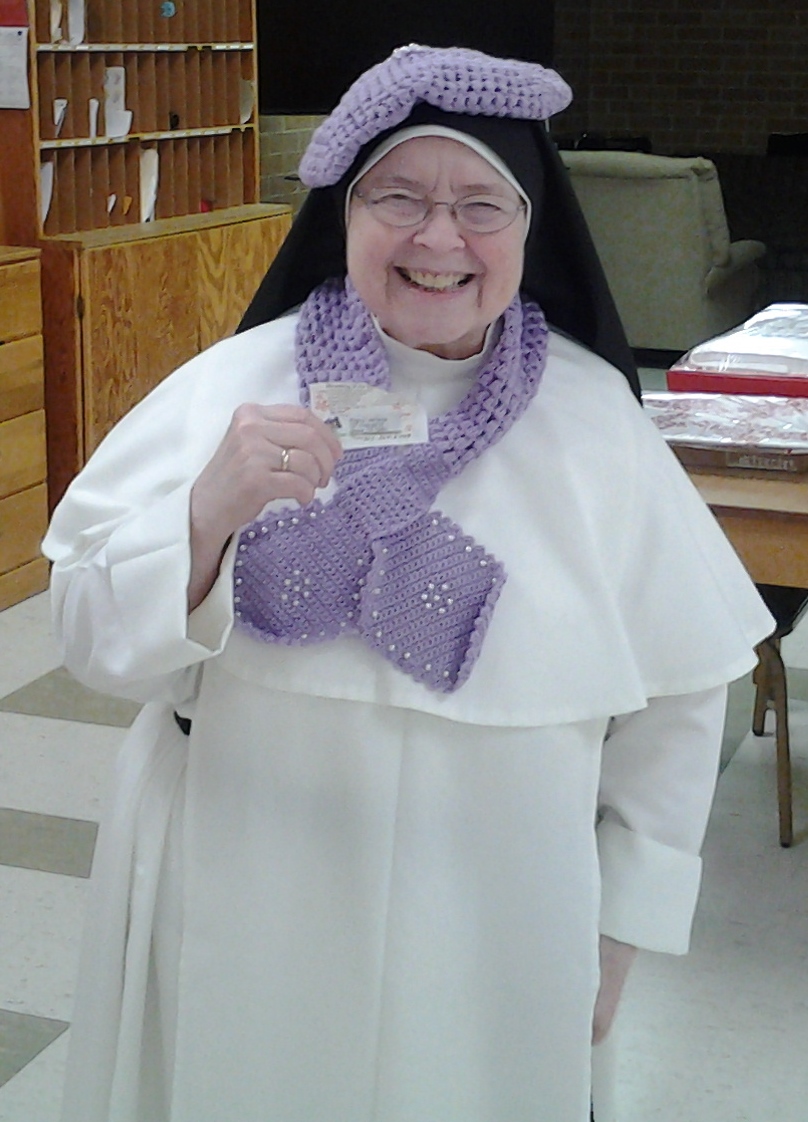
Recently, one of our benefactors made this hat metaphor more concrete by giving us a lot of hand knitted hats! Each one is different and unique, and each sister was allowed to choose one she thought was most fitting (in more ways than one–it\’s amazing how many sizes heads come in!). It was a delightful surprise and a welcome one, too. Many sisters enjoy walking in all sorts of weather, and this kind of hat is ideal for wearing over the veil. Some sisters prefer to wear a hat to bed, to keep their heads warm while they sleep, and they are perfect for this, too.
We are so grateful to this benefactor–and all our benefactors–who help us to live this life of prayer, praise, study and penance. We literally could not do it without you! Thank you, thank you all so much!