COVID-19 and the Triduum


“For it has been granted to you that for the sake of Christ you should not only believe in Him but also suffer for His sake.” — Philippians 1:29

Who wants to suffer? No one does, really. God created all of us to enjoy this world as much as possible while remaining within the boundaries He has set for us. For example: when some of us were kids, long ago, our parents set boundaries on how far we could ride our bikes. (Yes, without parental supervision, helmets, pads, etc. Hard to believe but true.) They also set a curfew: be home by twilight, or even when you see the first star. We had no cell phones or monitoring devices of any kind. Essentially, our parents trusted us to keep those boundaries–and most of us did, because we trusted that our parents knew what was best. (OK, we weren’t angels, but what kid is?)
The fact is: most of the time, we didn’t want to suffer unnecessarily. We preferred reluctantly pulling our bikes into the garage at dusk to the possibility of getting hit by a car or taking a fall due to some object in the road obscured by the growing darkness. No one knew a kid who had actually done this, but everyone knew of some legendary child who Stayed Out Too Late and got a flat tire on his bike and got hit by a car trying to push his bike home in the dark and spent the rest of the summer in traction.
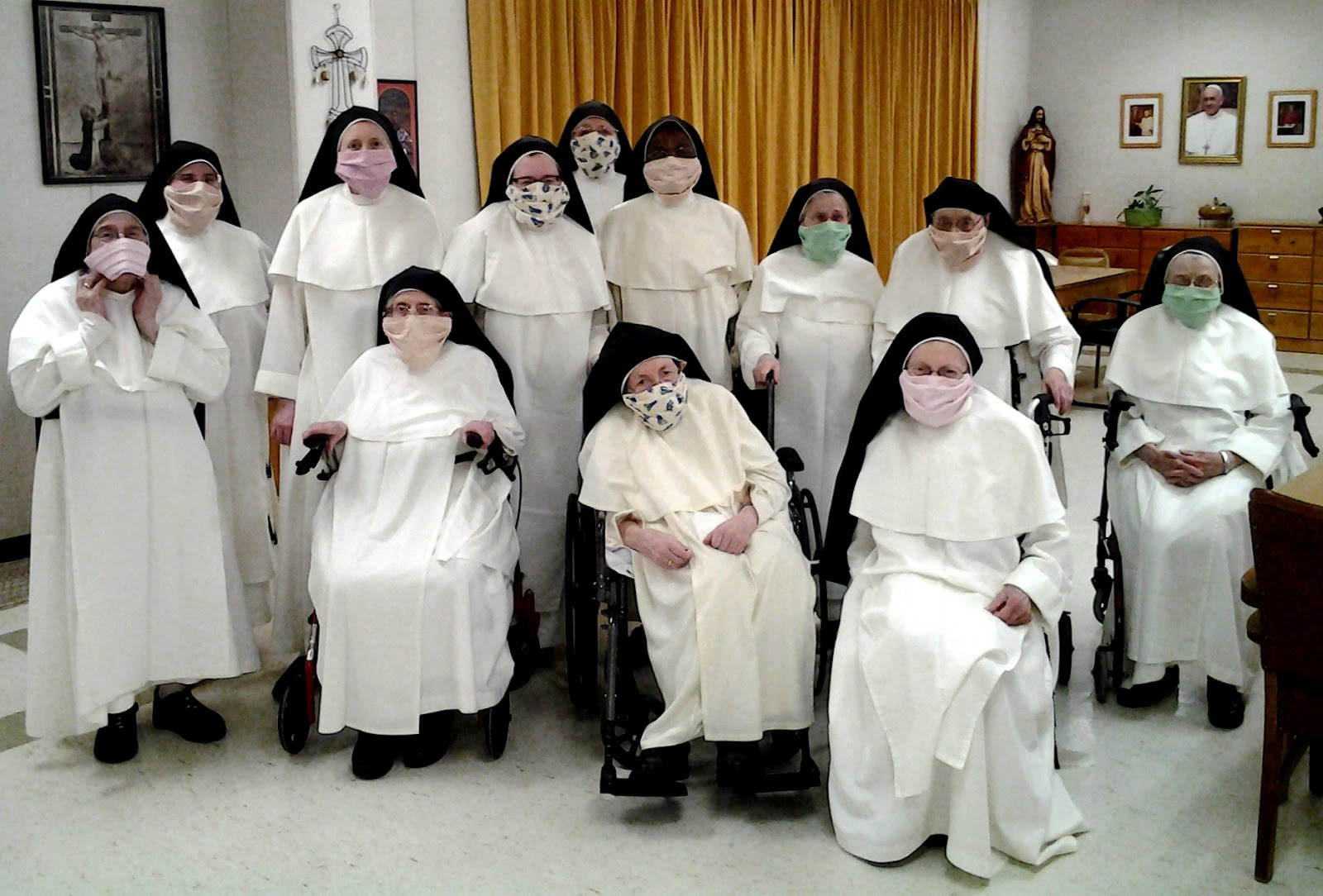
Now: here we are in this surreal Lent of 2020. We have become that legendary child whose story was almost, but not quite, impossible to believe. It\’s bad enough to have a pandemic of Biblical proportions (2 Samuel 24:15-25), but we are also forced to alter our whole way of life because of it. Wearing masks and other protective clothing have become standard practice. Online communication for schools and businesses is at a new high. People are trying to practice unfamiliar ways of living: social distancing, sheltering in place, quarantine. Doctors are saying we should never shake hands again, in order to curb both this virus and other illnesses. Maybe we Westerners can learn to bow instead? Elbow bumping and foot bumping both seem so awkward. We have been unexpectedly thrown into an alien lifestyle, and we are trying to pull things together into some new kind of normality, without much success.
So let’s take a look at our quotation from Philippians above: It has been granted to you that for the sake of Christ you should not only believe in Him but also suffer for His sake. Paul is telling us here that we have received a gift. How could suffering be a gift? Well, we must remember the first part of the thought before we consider this: for the sake of Christ we believe in Him. This is simple enough. During this very week we recall Christ\’s immeasurable love for us, which culminated in His death, taking away our sins. If we have no sins, we must be right with God! So no worries, right?
Well…yes and no. Christ did die, and took away our sins on Calvary. But He also told us to take up our crosses daily, in order to follow Him. (Matthew 16:24) Part of the gift is the struggle. This is so hard for our modern minds to grasp. More and more, we avoid difficulties, pain, sorrow, suffering, mitigating it as much as possible. We want the glorious crown of Christ without suffering for it. St. Paul reminds us here that such a reward does not come lightly–we cannot slide by on “cheap grace”, as the Protestant minister Dietrich Bonhoeffer explained. Because we have gladly chosen to ally ourselves with Christ, we should also gladly accept suffering. This is not suffering for the sake of suffering. This is following Christ wherever He goes.
It\’s important to remember, finally, that the cross is not the end–not for Jesus, and not for us, either. As C.S. Lewis writes in The Screwtape Letters (Letter 22):

He\’s a hedonist at heart. All those fasts and vigils and stakes and crosses are only a facade. Or only like foam on the seashore. Out at sea, out in His sea, there is pleasure, and more pleasure. He makes no secret of it; at His right hand are “pleasures for evermore.”

 As we make our way through this Triduum, please remember that we are praying for you. We encourage you to watch a live-streaming Mass or other prayers so that you may unite with the Church spiritually if not physically. We pray for all the good people who put their lives on the line each day in the attempt to keep us healthy and well-fed. May God bless you and reward you abundantly for all the good you do!
Media vita…

Every Lent, Dominicans sing the verse Media vita in morte sumus est, which basically translates, In the midst of life, we are in death. We even have our own special Dominican chant tone for it–probably not one you have heard before. For many years, we have sung this verse at Compline, but we realize now that we never took it with the seriousness it demands. There have been years when one (or more) of our sisters died during Lent, but these sisters were all elderly and sick. It saddened us, but it was not a surprise. This year is different. Although no one in our community has fallen sick (and we pray no one does), the magnitude of this crisis forces us all to contemplate the reality that we never know when death will come. God may give us months or even years of preparation, or He make take us suddenly. It doesn’t have to be a pandemic. There are so many things that could come together at one instant: a car accident, or a tree falling (something that is possible in our monastery surrounded by forest), a plane crash. A sudden stroke. Anything.

That is why we take particular care to meditate on death both during Advent and Lent. Although this may seem morbid or even a sign of mental illness in the world, for a Christian it is vitally important to remember that this life is a kind of preparation, a testing ground, for the next.  Will we turn to God for help when things start to look bad? Or will we try to drown out His whispers with partying? In times like this, people tend to do one or the other. We have been edified to see so many people of different ages, races, and faiths come together trying to help during this pandemic. We have been sorry to hear stories of people taking advantage of this crisis by price gouging, hoarding, and theft. It\’s not hard to check your conscience here. Ask yourself: If I had a sudden heart attack and fell on the ground dead, would I be ready to meet God? Be honest! 


There are so many people risking their lives to help us right now–particularly in the medical field, but also those who keep “necessary businesses” open. We appreciate you risking your lives trying to help others. Here in our monastery, we are used to “staying at home\” and \”sheltering in place\”, but we also pray for all of you who are trying to work from home, and home-school, and everything all together. Please pray for us, too. So far, it seems that the monasteries in the United States and Canada have been spared, but we never know what tomorrow will bring. We just take it one day at a time. And we always remember, whether it\’s Lent or not: media vita in morte sumus est
(Above: Dominicans of the U.S. Central Province (St. Albert the Great) and Southern Province (St. Martin de Porres) singing the Media vita in Latin)

"Float Like A Butterfly, Sting Like A Bee" Part Two of the Annunciation Sermon

This is the conclusion of Sister\’s homily. We wish you a blessed Solemnity of the Annunciation!
Because Mary was conceived without original sin, sometimes people suggest that she knew everything that what was going to happen for the rest of her life after Gabriel came to her—particularly, of course, the death and resurrection of Jesus. I don’t believe this was the case. If you know everything that will happen in advance, your obedience is more like submission to some greater power than an act of free will. Obedience is not bracing yourself for the next terrible thing you know about in advance, or rejoicing because you know something good is coming. It is like a wedding vow: “for better, for worse; for richer, for poorer; in sickness and in health…” Or like a religious vow. You make your vow of obedience until death, and then you trust God to lead you in all His ways. There are only so many questions you can ask before you realize that you either have faith in God, or you don’t. Mary understood this. She asked Gabriel the one essential question, and having received the answer, she stepped freely into the darkness of faith, confident that God would gradually brighten her path as the years passed.
            On this day  when Mary proclaimed her obedience to God by accepting His will trustingly, a battle commenced which is still going on today in the hearts and minds and souls of all men and women here on earth. Sometimes—perhaps more often than not—it looks like the power of sin and evil are standing their ground, or even making inroads into this disputed territory. But we must always remember that here in our present lives, we can’t see things as clearly as God does.  We don’t understand why things turn out the way they do. For us, there is often a different temptation: a temptation to despair, to give up. When we have despairing thoughts, we should remember that Satan—or one of his minions—is whispering these words into our ears. The best advice: don’t listen. Ignore him. The longer you tolerate him, the worse it gets. Instead of wasting your time dialoging with Satan, do something positive. It doesn’t have to be big. Fr. Jacob Boddicker, SJ recently wrote an article on how to “fight the battles you can actually win”. He says: “Consider the fact that an avalanche can destroy an entire town and is made of snowflakes, or that a tsunami can devastate vast regions and is made of drops of water.” All these little acts of patience, kindness, humility; all the ways you are helpful; all the little good deeds no one ever notices: these are the snowflakes, the drops of water that Mary points out to us with a simple word of Yes to God. These are the quick, dance-like steps some boxers use to throw their opponents off guard so they can knock them out cold.
            Doing concrete good deeds, big or small, will save souls. Sitting around fretting about the state of the Church in general won’t. That’s why I especially love the image of Mary from an illuminated manuscript. It’s an interesting contrast with similar illuminations of Eve. In these, Eve is often looking at the fruit pensively, listening to the serpent, thinking. In this picture of Mary, Satan is standing in front of her, apparently trying to hand her something. Mary is smiling very sweetly and smashing her fist into his face. As the acclaimed boxer Muhammed Ali said, “Float like a butterfly, sting like a bee.”

Float Like A Butterfly, Sting Like A Bee: Part One of the Annunciation Sermon 2020

There is a tradition in the Dominican Order to have a special, more formal chapter meeting on the day preceding the Annunciation and the day preceding Christmas. On March 24, one of the sisters sings the Gospel of Luke that tells the story of Gabriel\’s visit to Mary, using the special plain chant melody of our Order for this occasion. Following this, one of the sisters gives a “sermon”, a talk that perhaps inspires other sisters with her unique thoughts. And maybe you will be inspired, or thoughtful, or something yourself as you read this year’s sermon by Sr. Mary Thomas, OP. It\’s a little long, so we will post half of it today and half tomorrow.

 Chapter One of Genesis is a most beautiful depiction of the creation of the world, including all the plant and animal life, and finally the creation of man and woman. But for some reason it stops right there. It is in Chapter Two that we find the story of how the man was created from the dust of the earth; how the animals were presented to and named by the man; and then God’s creation of the Garden of Eden, filled with every kind of delicious fruit and vegetable, plus the tree of the knowledge of good and evil, and the tree of life in the center of the garden. God tells Adam, this first man, “I have given you all the green plants for your food; but you may not eat of the fruit of the tree of the knowledge of good and evil.” There is only one thing lacking in this place of perfection: a suitable companion for Adam. So God takes one of Adam’s rib bones and makes it into a woman, and Adam names her Eve.
            As the story progresses, we meet the serpent, who tempts Eve to take fruit from the forbidden tree of the knowledge of good and evil and eat it. We know how this sad story ends. Eve accepts the fruit and eats it, and she gives some of it to Adam, who also eats it. Then they realize they are naked, and hide themselves from God. Have you ever wondered why Eve did this? She was perfectly happy in Eden, with her perfect husband and a healthy vegetarian diet, not to mention an unbelievable friendship with God, their Creator. I think C.S. Lewis’ novel Perelandra can shed some light on how things might have happened. In this book, the hero is mysteriously transported to the planet Venus (called Perelandra, in the novel), where he encounters a woman who is the equivalent of Eve on our planet earth. This woman, too, is tempted by an evil creature to break the rule God gave her, but this temptation takes place over a very long period of time. The creature tries all kinds of suggestions, tells stories, encourages vanity, anything to help his case. In the novel, the hero wonders if Eve faced a similar challenge. Did she immediately succumb, as the Biblical text seems to indicate, or did she face the same constant, wearying temptations the tempter uses on the woman on Perelandra? Did she finally just get tired and decide to take the fruit?
            Move forward unknown ages of time and we are in in a town called Nazareth in Galilee, where we find a virgin, betrothed to a man named Joseph. Her name is Mary. The angel Gabriel comes to her with a startling announcement: Mary has been selected by God to bear His only Son, a child who will sit on the throne of David and rule forever. Mary is puzzled by this, because she has made some kind of vow of perpetual virginity. But the angel reassures her. It will be a childbearing like no other; this child will be conceived by the Holy Spirit. And as proof, Gabriel adds, “Your cousin Elizabeth is six months pregnant—Elizabeth, the one everyone thought was barren! Nothing shall be impossible for God.” Mary considers this, and then replies: “I am the handmaid of the Lord. Let it be done to me according to your word.” Her response was ideal: prompt, obedient, trusting. With this acceptance, Jesus is conceived in her womb. Nine months later He will be born, in Bethlehem. Some thirty years after that He will be crucified and buried, but He will rise from the dead, and his kingdom will truly have no end.

News About COVID-19

Things keep changing daily, and it’s hard to keep up sometimes! The Bishop of our diocese asked yesterday for all public masses to be suspended. However, since we are not exactly a public church, we did have our doors open this morning for those who wished to come. There were two–possibly three people, It’s not many, but we usually have more on weekdays, and large numbers on Sundays and First Fridays and First Saturdays and holy days…and at some point, it could have become an issue. So our prioress, Sr. Mary Margaret, contacted the Bishop, and he asked us not to have public Masses either. So–for the time being, the chapel will not be open for Mass. It will be open for the Liturgy of the Hours, however. We will keep you updated as we learn more.

We are “sheltering in place” as they say–a situation that comes naturally to cloistered nuns! But we keep always before our eyes the sufferings of all the people uncertain about work, food, health, and even having the basic necessities of life. This is a time for all of us to remember that God is in control of this. Let’s continue to stay calm even while we take precautions; let’s keep on praying to St. Catherine of Siena or any other saint you like (there are lots invoked in times of sickness and plague). We have a link to Bishop Strickland\’s cover letter to the diocese here and his decree here. Both are worth reading, especially if you live in the area. May God be with us all!

A Visit with Br. Thomas Hetland, FSC

Br. Thomas Hetland, FSC, with most of our younger sisters (some couldn’t get away from work, one was at adoration, and one took the picture)

Br. Thomas is a member of the Christian Brothers, and for some years now he has been helping us with our health insurance needs. The Christian Brothers were originally founded as a teaching order, but after Vatican II when so many changes were taking place and fewer people entered religious life, one of the brothers had the idea to diversify their mission by taking on insurance needs for clergy and religious as well as those lay people employed by them. And they are doing very well, it seems! Br. Thomas was happy to tell us that this is our 30th year with Christian Brothers!

Not long ago, we changed our plan a little, so that now all the sisters who are too young to be on Medicare use Cigna as their insurance provider. Every year when Br. Thomas comes to our monastery, these younger sisters are strongly encouraged to visit with him in the parlor and find out what is new. Some of us were intrigued by a new plan called HAWA–Healthy As We Age–which provides free blood tests to check various functions, including a complete metabolic panel, liver, kidney, etc. They will also help with nutrition advice and exercise. Although it\’s hard to commit to exercise and such (in this respect, nuns can be like anyone else!), we know that by keeping healthy we are serving the common good of our community. And that, as St. Augustine writes in his Rule, which we follow, means we are growing in charity!

Please pray for us and all those who benefit from Christian Brothers’ services, and for the Brothers themselves who have adapted to this new mission.

COVID-19 and St. Catherine of Siena — UPDATED

Like many of you, we\’ve been monitoring the ongoing coverage of the spread of COVID-19. Of course, as cloistered nuns we don\’t get out much! But we do have public Mass every day, and people who work for us, and who help us with things like shopping. Above all, we want to take a calm middle path: not too hysterical and not too flippant. This is difficult, because as C. S. Lewis reminds us in his book The Screwtape Letters, the devils are constantly trying to push us to one extreme or another. However, we have an outstanding patron we can turn to at this time, and she just happens to be not only a Dominican saint but also patron of nurses and co-patron of Italy. Yes–St. Catherine of Siena!

St. Catherine nursed all kinds of people through the plague in Italy during the 14th century, including many of her own young nieces and nephews, most of whom unfortunately died. She also nursed other people with serious and/or chronic conditions during her short life. She had no fear of infection, and she never got sick. 
If St. Catherine was among us, she would be the first to remind us that no matter what happens, we are always in the hands of God. If we put our trust in Him, we will not be disappointed. Let us take precautions, but always rely on God.

St. Catherine of Siena, pray for us!

UPDATE: The Master General of the Dominican Order, fr. Gerard Francis Timoner, has issued a letter concerning COVID-19 and the Dominican response. We encourage you to read it here.