Celebrating Tet

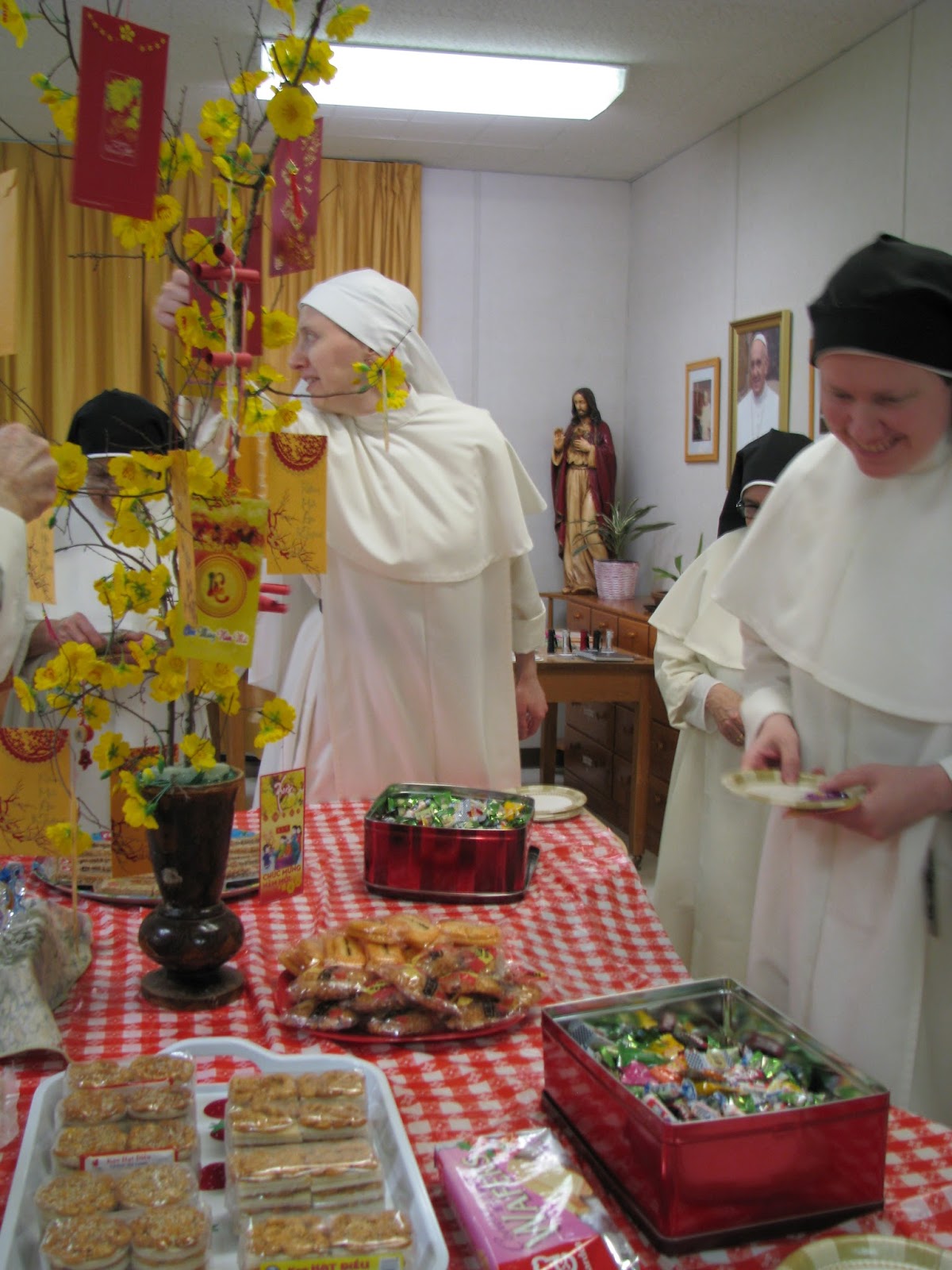
Sunday evening we had our traditional Tet celebration here in Lufkin. Although the actual date was January 28. Our organizer for the event, Sr. Mary Christine, was in Trinidad, so we had to wait until her return.

First, of course, is to get our Vietnamese treats and \”Lucky Envelope\”–which contains gift money. In the end, it all goes to our Bursar/Treasurer.

Second, the nuns huddle around the gift table to see what is available to \”buy\” with the tickets they receive for winning the New Year games.

We usually have 3 games. The first two pertain to the animal character being celebrated during the coming year–2017 is the Year of the Rooster, so you can see our games were appropriate. Then, we always end with a traditional Vietnamese game of tossing a very large die with animal figures on it.

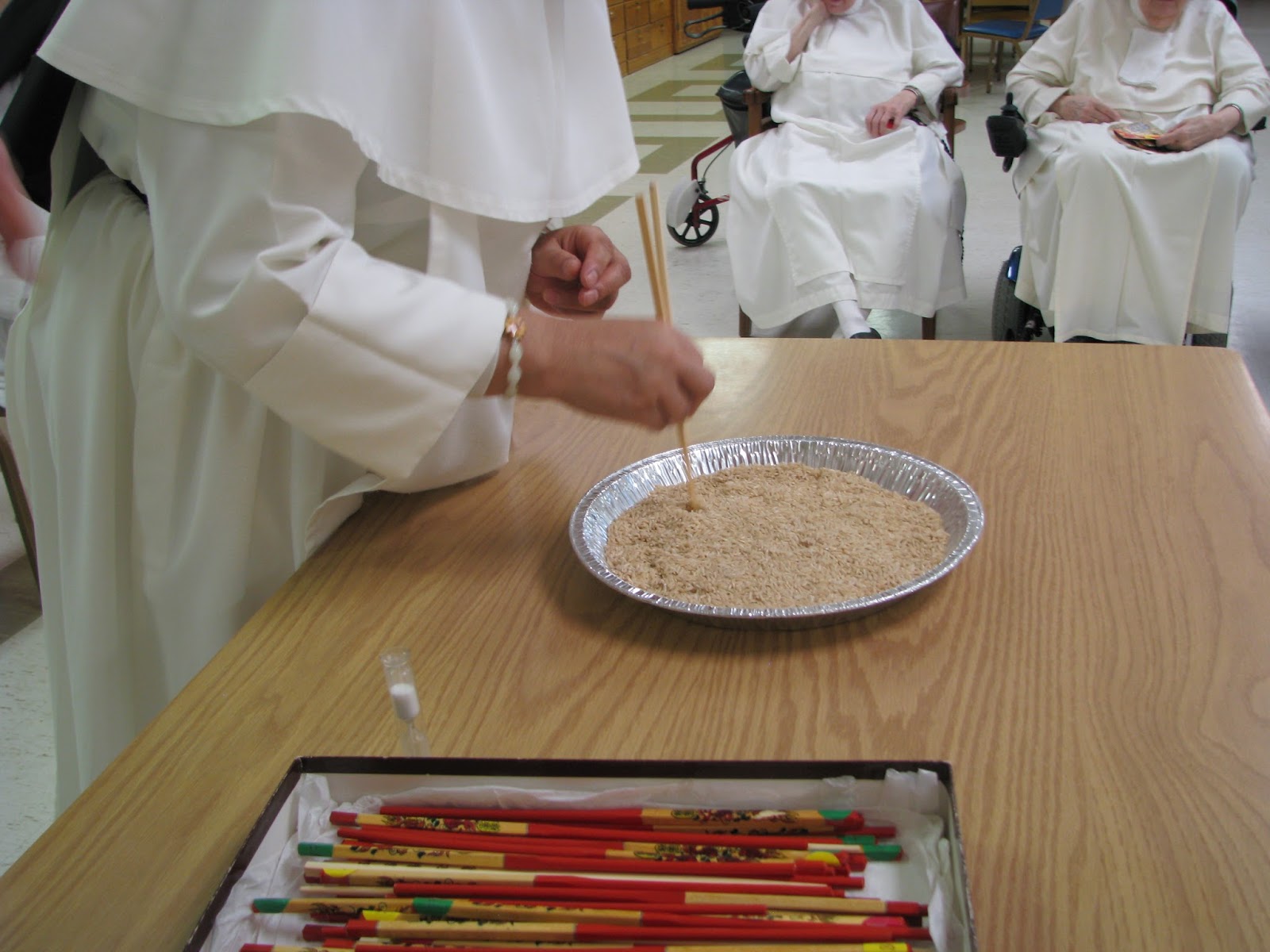
Using chopsticks, which some of the nuns have never done before, the sister must peck in the sand to find the worm. For each worm found, one receives a ticket. The worms were pieces of nylon cord we use to make rosaries. A few sisters pecked 3, 4 and even 5 worms within the allotted 1 minute.

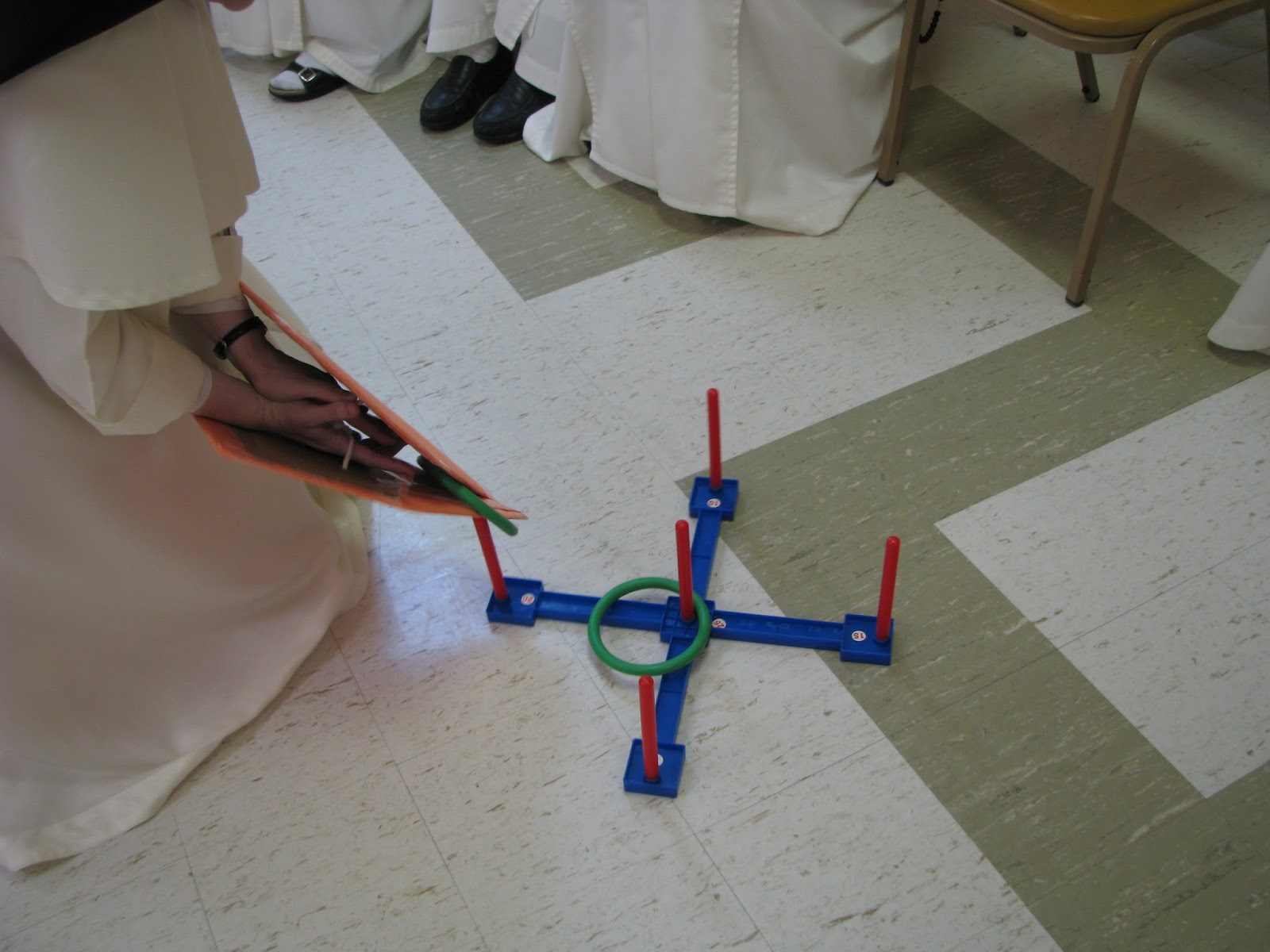
In the second game, the sister must hold two large pieces of cardboard resembling the rooster\’s beak. With the beak she must pick up 5 plastic loops and carry them to a post.

The Sisters thoroughly enjoyed the games this year. Usually they are so difficult very few can win, but these were a bit easier and lots of fun.

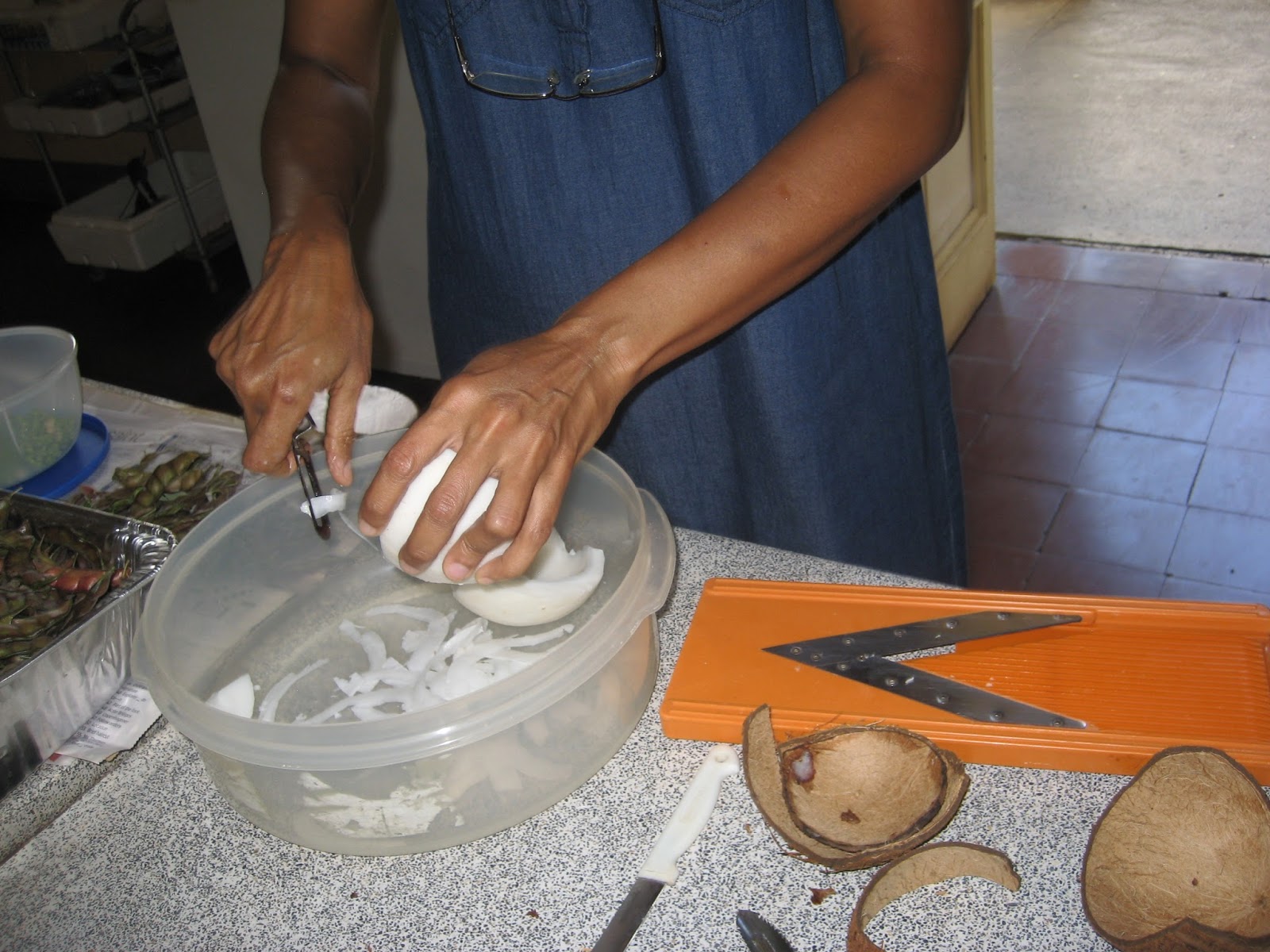
We learned that our sisters also celebrated Tet at the Monastery in Trinidad, teaching the nuns of its cultural importance. Of course, the nuns in Trinidad knew of Chinese/Asian New Year, because for years they have been hearing the music from the \”Chinese Association\” which is next door to them. Sister Mary Christine and Postulant Jasette made the treats, especially the delicious young colored coconut.

Mutual Enrichment

During the stay of our nuns in Trinidad, there were many experiences of mutual learning among the Sisters. Each sharing her gifts, knowledge and talents. One evening, our Sister Mary Jeremiah gave a lecture on St. Catherine of Siena to members of the Dominican Family who had been meeting every first Monday of the 800th Jubilee Year celebrating the founding o the Dominican Order. All the entities of the Family-friars, nuns, active sisters, laity and youth-exist and collaborate on the Island.

On several days, our Sister Mary Christine taught their sacristan, Sister Elizabeth, how to arrange flowers for the chapel. There is no shortage of flowers or greenery on the monastery grounds for fine arrangements. The Sisters often put 5 different arrangements in the chapel: beside and in front of the tabernacle, in front of the altar, by the statue of our Lady and one by a statue.St. Martin de Porres.

Sister Mary Christine and Sister Mary Jeremiah both taught the sisters in formation how to make cord rosaries without the use of a tool. The postulant, Jasette, was particularly eager to perfect this skill and she practiced every evening at recreation.

Naturally, our Sisters learned a great deal about Trinidadian culture, food and the healing properties of some of the countless plants. They saw the expansive \”savannah\”, or large park area, not far from the monastery where much of Carnival takes place. People are already gearing up for that festivity which takes place the two days before Ash Wednesday, beginning of Lent. Trinidad and Tobago are the birthplace of calypso music and the steelpan, which is the only musical instrument created in the 20th century.

The Sisters also learned about \”sorrel\” a red flower that grows on a bush and is made into a drink. We even used its red juice to dye some coconut to celebrate Vietnamese New Year. We were able to bring some home and our Mexican Sisters were thrilled because in Mexico they call it \”Jamaica\” and make a similar drink. In fact, they have already used half of the package for a delicious and refreshing drink containing chopped apples and pecans.


Sojourn in Trinidad


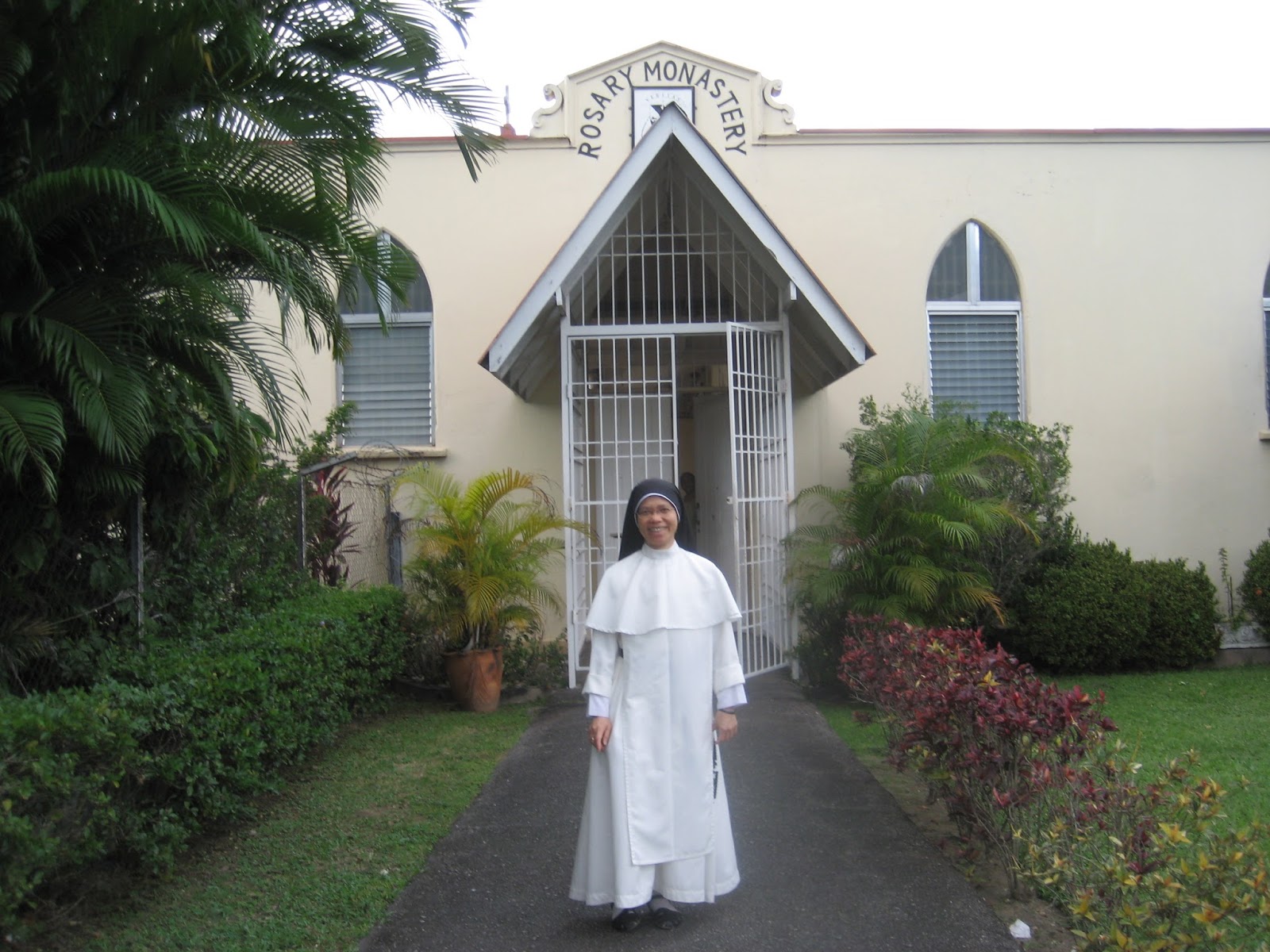
Two of our Sisters returned yesterday from Trinidad, the most southern of the Caribbean islands, just east of Venezuela. They were gone for three weeks to help the Dominican Nuns at Rosary Monastery in the capital, Port-of-Spain.

Their superior, Sister Ann, had been invited to speak at the closing Congress for Mission for the 800th Jubilee of the founding of the Dominican Order.  Sister Ann spoke about how cloistered nuns are preachers in the Dominican Family. She spoke on the last day with other representatives of the Dominican Family: a layman, an apostolic sister and a cooperator brother.

Here are our two sisters: (l. to r.) Sister Mary Christine and Sister Mary Jeremiah. They spent many days harvesting and shelling pigeon peas, a popular local legume.

Our Sisters had hoped to share on the blog while out of the country, but the internet security prevented them from accessing our blog. We will share some of their photographs over the course of the next few days.

O Little Town of Bethlehem

On January 3, the optional memorial of the Holy Name of Jesus, we gathered to bless our new statue of Jesus. The ceremony began at 4:20 pm when we informally gathered by the garage.

Our chaplain read a number of prayers of blessing and sprinkled the statue with holy water.

To conclude the ceremony we sang 3 verses \”O Little Town of Bethlehem\”. It was not considered a public event, but we did invite our generous benefactors who helped make this special occasion possible.
 

May all those who look upon or pray before this statue of the Child Jesus be blessed in a very special way.

"Baby Jesus is Here!"

On the eve of Christmas Eve – December 23 – a message was passed among the nuns, \”Baby Jesus is here!\”  A statue of the Toddler Jesus, that is. But first let\’s give some background.

Religious communities periodically have what is called a \”Visitation\”. We have one every 3 years. A visitation is a time for the community to examine itself on its strengths and weaknesses in order to continue growing and improving. It is usually presided over by a Dominican priest appointed by the Master General. Each Sister, from the youngest to eldest, has the opportunity to speak privately with the visitator. A recommendation from a visitation over 20 years ago was to compose a \”mission statement\”, which we did. Our statement referred to the Monastery of the Infant Jesus as a \”spiritual Bethlehem\”. Time went by, then we had our last visitation 2 years ago, and a different visitator recommended that we have a statue or shrine to the Infant Jesus, our patron, in the outside area.

When we were founded in 1945 we did have a lovely statue in the front yard; but when we moved into our new buildings in the late 1960\’s the statue ended up in our infirmary yard. We did not want to put this one outside for fear of vandalism, but more importantly because of its historical and spiritual meaning to the Sisters. So, we decided to get a new one; that was easier said than done. But after much help from a dear friend, we now have a beautiful new statue that arrived and was put on a pedestal in December 23.  

Christmas Eve

Every year on the morning of Christmas Eve about 6:30 we gather in the Chapter Hall, (a large room for solemn monastic occasions) . There is a special reflection, usually given by one of the younger Sisters. This year it was given by our Novice, Sister Mary Therese. It was very good and you can read it below the next photo.

Also, each year on Christmas Eve after Vespers (Evening Prayer), our chaplain comes in and blesses the Nativity Scenes in the Community Room and Refectory (dining room).

Solemn Chapter 2016
     This year, the Dominican Order celebrates the 800th anniversary of its founding. St. Dominic founded an Order 800 years ago dedicated to preaching the truth of the Gospel. Specifically, he wanted to preach the Gospel to the Cathars–heretics who believed in a dualistic reality in which matter and spirit were opposed to each other, with matter being evil and only spirit being good. Our Order was initially established to combat a heresy that the miracle of Christmas challenges.
     What is so special about Christmas? Why is Christianity the only religion that celebrates the birth of its founder, a birth that happened decades before Christs really \”did\” anything, things that identified Him as a religious leader such as preaching and performing miracles? Of course, the conception and birth of Christ is itself a miracle. The Virgin Mary conceived by the Holy Spirit and bore Jesus Christ, God made man.
     But the fact that God became a man at all is an even greater miracle. We Christians, 2000 years later, are accustomed to the idea of God becoming man. It is hard for us to understand how truly shocking this event was. Why did God come to earth as a baby? What would have happened if He had come to earth as a grown, powerful man, as one would expect a God to do it He came to earth at all? And why DID He come to earth as a man at all? Could He have saved us just as a divine, spiritual being? What\’s so important about our physical nature that God wanted to redeem that, too?
     God is spirit, with no physical nature, and thus it is tempting for us to dismiss the physical as \”lesser,\” particularly as it is easier to see the flaws, brokenness, and messiness of the physical world. The spiritual world is exalted, esteemed, even mysterious, which makes it seem better and more important than the physical. But God created the physical world, and God created all things good. God Himself values the physical, natural world; He created it and wants it to exist and be saved.
     With the celebration of Christmas, we are reminded of the goodness of the world. God chose to come to earth as a human to redeem our humanity. He wanted to redeem not just our souls but our bodies as well. And He did that by living as a normal, physical human being, which includes coming into the world as a baby, just like everybody else does. From the day of His conception to the day of his crucifixion, Jesus endured all the suffering and messiness of a physical body in our fallen world. He chose to come to earth through a physical mother, instead of descending from on high in a glorified body. He lived nine months in Mary\’s womb and then was born, coming t\\into the physical world the same way every other human being does. He then experienced childhood and all of the growing pains and scraped knees that every other child has. As an adult, He endured hunger and thirst and extreme discomfort during His mission of preaching and healing. And during His passion, He suffered unimaginable physical and emotional pain. And in experiencing a fully physical human life, Jesus redeemed humanity in both our bodies and our souls.
     Christmas is a celebration of the goodness of the physical world, because we celebrate God\’s great decision to incarnate as a physical human being in order to redeem the physical world. God created the natural world, and He created all things good. The natural world is now fallen, yes, but it is still fundamentally good and worthy of redemption. God created us as both body and soul; we are embodied souls. The \”real me\” includes both spiritual and physical natures, and we are not truly human without both. Even in the next life, we are promised a resurrection of our bodies, so that our physical and human natures will be forever united in the Kingdom of God.
     The miracle of Christmas proves that God loves us completely, both body and soul. He loves us more than we love ourselves. It is we humans who are tempted to reject the physical, in all its ugliness and pain. But God loves our entire humanity. He wants our spirit, but He also wants our body. At Christmas, we celebrate the incarnation, in which God embraces our human nature with complete love and acceptance, in all our frailness and woundedness. Christmas is a celebration not just of Jesus becoming human, but of all  of us being created in His great family of humanity, a family He joined to bring together as one body to redeem.

Emmanuel, Come!

(tune: O come, O come Emmanuel)

O come, O come, Emmanuel,
And ransom captive Israel;
That mourns in lonely exile here,
Until the Son of God appear.

Rejoice! Rejoice! Emmanuel,
Shall come to thee, O Israel!

With each succeeding day, the O of our invocation, and the Veni of our supplication has grown more confident, more intense and, in a sense, more urgent.

Emmanuel. Is there a name sweeter or more tender? God-with-us. “Nothing in our difficulties, our misunderstandings, our sorrows, even in our agony, will find us alone. We will always have Someone with us, Someone present in our very heart to give the strength and light necessary in those moments.” (1964, Mother Marie des Douleurs Wrotnowska) Therefore, we never again need to be afraid or worry.

Be Emmanuel for us always. Never leave us, always with us.
Amen.