Solemn Christmas Chapter 2019

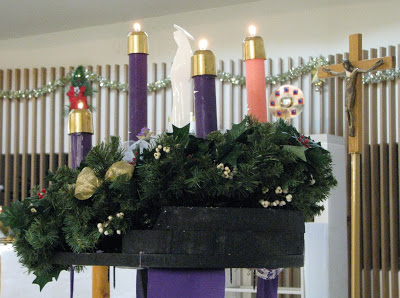
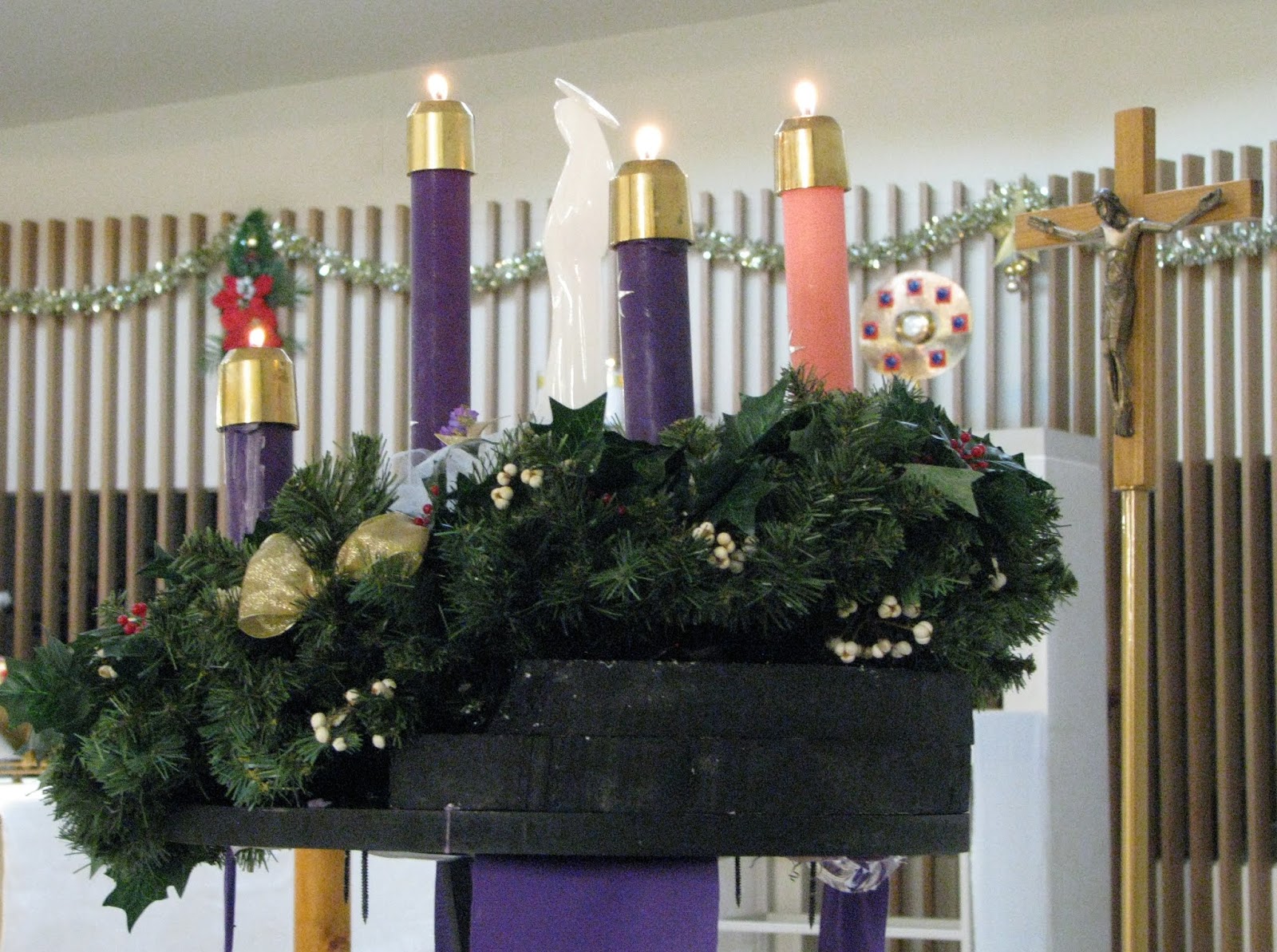
The photograph below from our Chapel this morning is a summary our our entire Salvation History. From this angle, one can see God\’s Great Mysteries –  –  –
  • Our Lady stands in the middle radiantly white as the Annunciation
  • the four candles surrounding Mary on the Advent wreath represent the longing, yearning and anticipation for the coming of a Savior
  • the garland that crosses horizontally across the entire scene and unites all the images demonstrates that we are ready to celebrate the Birth of Jesus
  • the Crucifix on the right reminds us of the price Our Lord paid for our salvation, hope and peace
  • the monstrance in the background shows us the Risen and Glorified Lord of the entire universe
  • Emmanuel = God with us!
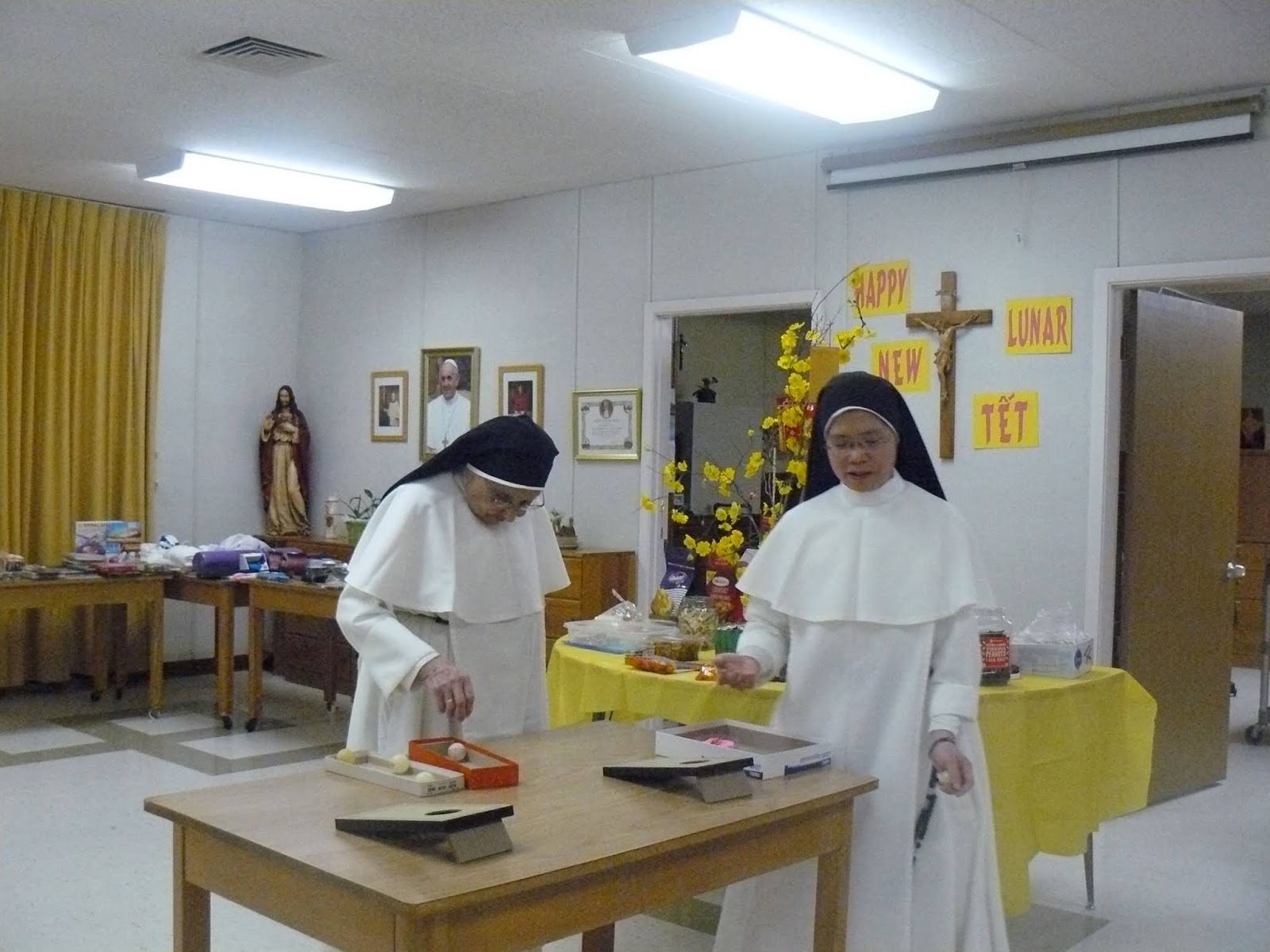
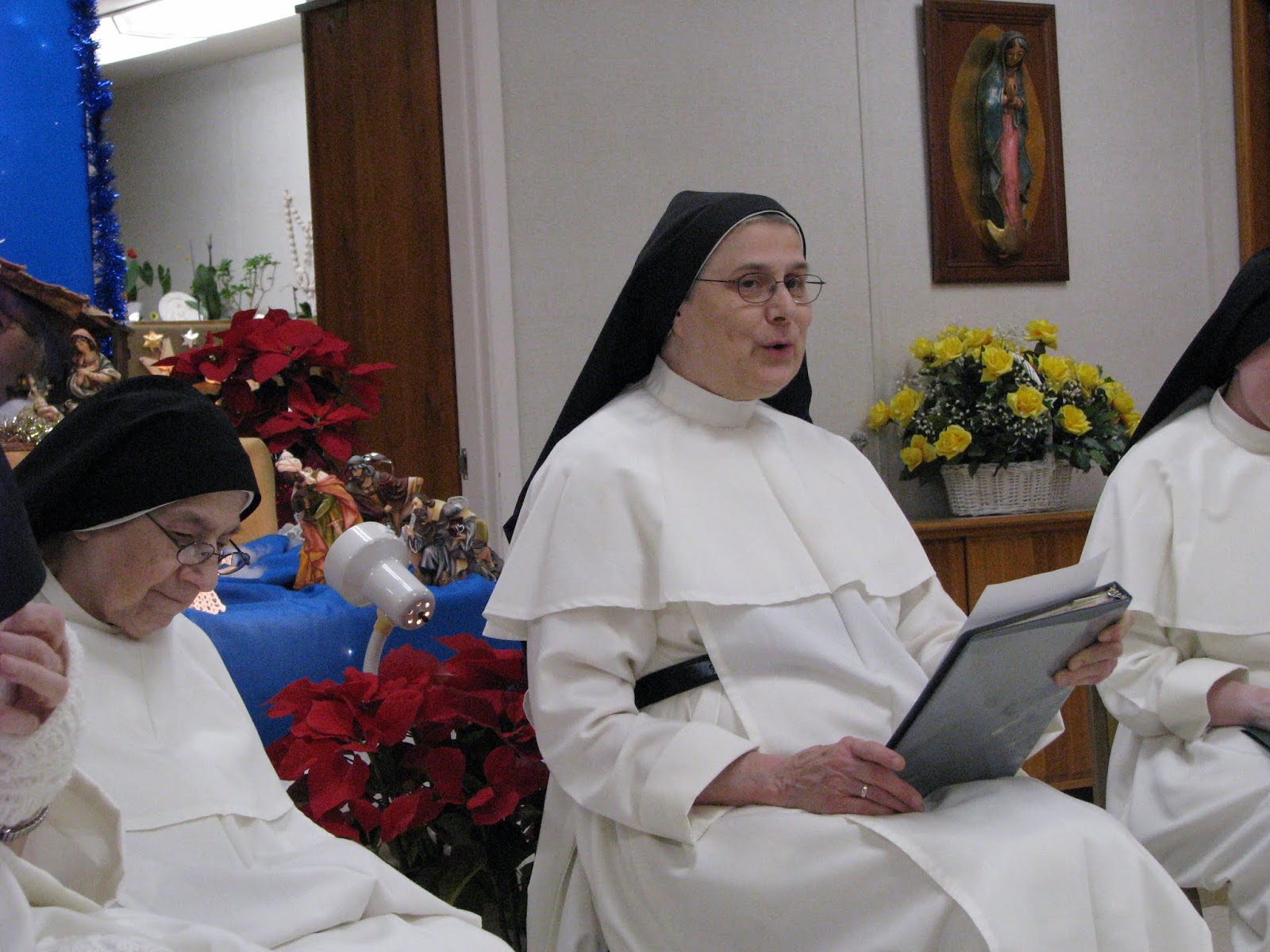
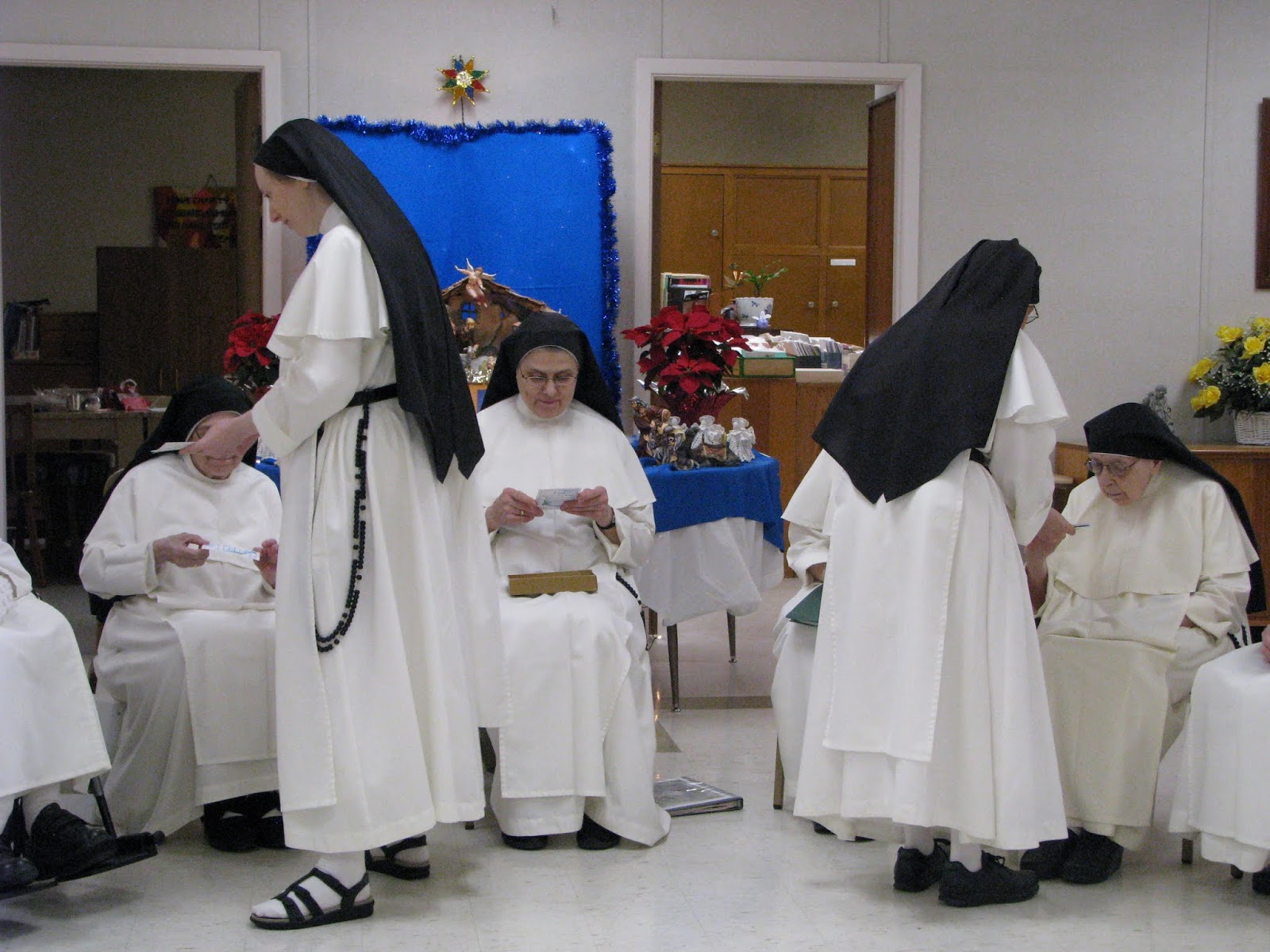
This morning, in the last hours of Advent, the nuns gathered in the Community Room because the new cooling and heating system has not yet been connected in our Chapter Hall. We met for our annual Solemn Chapter to reflect upon the great mystery of the Incarnation. after the chanting of the ancient martyrology by one of the Sisters, another gave a reflection on an ancient Advent hymn, Drop down dew from above.          Below is that reflection.
Solemn Chapter 2019
This morning, December 24, we are still in the Season of Advent, awaiting the mystical coming of Jesus Christ into our suffering world. I would like to reflect briefly upon the ancient hymn, Rorate caeli, Drop down dew…
Rorate coeli desuper et nubes pluant justum
Drop down dew, ye heavens, from above, and let the clouds rain the just
And the response:
Aperiatur terra et germinet salvatorem
Let the earth be opened and send forth a Savior.
This verse from Isaiah 45:8 in the Vulgate, is a very familiar refrain during Advent, leading into Christmas. The text is used frequently both at Mass and in the Divine Officeduring Advent, as it gives exquisite poetical expression to the longings of Patriarchs and Prophets, and symbolically of the Church, for the coming of the Messiah. If fact, just 2 days ago on the Fourth Sunday of Advent we used it three time in the Mass. During the Middle Ages it was called “The Advent Prose.”
In 1910, it was translated very beautifully by W. Rooke-Ley for the Scottish Book of Hymns, as:
Mystic dew from heaven
Unto earth is given:
Break, O earth, a Savior yield—
Fairest flower of the field. 
 The verses of this hymn give expression to profound human longings and sentiments of sorrow, penitence, expectation and comfort.
In the literal sense, we could say that the first verse is an admission of helplessness and need for God. It bemoans the destruction of Jerusalem and the Temple by the Babylonians. The “city of the Holy One” is laid waste, because of the sins of God’s people. This is punishment for their sins.
The second verse is a further confirmation of guilt. Sin has made the people lifeless like a dried leaf falling to the ground and being swiftly swept away by the unseen wind. It is not that God has broken them, but “the weight of our own sinning” has done it.
While the first two verses express the devastation of Jerusalem, the third verse begins to focus more on God and His compassion. We hear the people’s longing for the “Lamb who rules all earthly kingdoms.” But what is the reference: from Petra in the desert, to the mountain of the daughter of Sion?”
Do you have any insights? If I remember correctly, Fr. Dwight Longnecker in his book last year on the Mystery of the Wise Men, wrote that Petra might have been the region of the Magi. This would be a connection between the Nativity and the Passion. That is Petra refers to Christ’s birth and Sion to His death.
In verse four, we hear the beautiful words of Isaiah of YHWH and His plans to comfort His people. God will send them healing/ salvation “most speedily”, through himself / His Son, the people’s “sole redeemer”.
When God speaks, His words are meant not only for one period of time, but for all times and all peoples who will listen to them. To look into the spiritual meaning of these verses, we could say that society and religion are collapsing all around us. What are we to do, we who live lives hidden from the world?. Our Church is not meant to be a museum, but a living reality, the Bride of Christ. Each person is a “living” cell of Christ’s Body.
In verse 2: We reflect that the sins and failings of the leaders and members of the Church have cast Her low. Has the Father “hidden His face”? No, it is the ‘weight of our sinning” that is crumbling the needed structures.
In verse 3, we begin to recognize our need of a savior. After 2,000 years, are we no much better off than the first generation of Christians; no closer to the Coming of Christ’s Kingdom. And, yet, we yearn for the coming of the Lamb who will bring healing and forgiveness.
Yet, with verse 4, our hope bursts forth when we hear the Divine words of Comfort, God has not forsaken us. He will send us His Son. Let us be transformed not by sorrow, but by hope and joy. The Most Holy Trinity is our sole Redeemer Who will come to each believer in a more profound way this Christmas. Finally, we reflect briefly on the Refrain:
Rorate coeli desuper et nubes pluant justum
Drop down dew, ye heavens, from above, and let the clouds rain the just
And the response:
Aperiatur terra et germinet salvatorem
Let the earth be opened and send forth a Savior.
The church begs God to send down the waters of Grace which enable Justice, Salvation, the God-Man, to spring forth from the earth. These words cry out for a Savior Who is both Divine from above and Human from below—Whom we know as Jesus Christ our Lord. This verse prefigures the Incarnation, the uniting of Divinity and humanity, the spiritual and material, the Creator and the creature.
For a thousand years this verse from Isaiah has been the most popular description, or catchword, for Advent.
I wondered why. The thought came to me that for most of humanity’s history, society has been agricultural, and of course, this is still important for our physical survival. But since the 19thcentury, many people have become dependent upon others for their food. Those who farm, or garden, know the importance of rain for the “almost magical” mystery of growth and new life springing up from the soil. Rent seeds may fall into the earth, but it is rain – water- that makes them all germinate, each according to their own “kind”.
In this verse we have the divine showers coming down from the heavens to water the material earth so that we might have food to live. So too, god has dispensed His grace upon us to enable the seed of divine life within us to grow and reach maturity.
In the present time of crisis and confusion within the Church and the world, we must continue, and even re-double, our privileged and indispensable vocation of worship and intercession.
Without the contemplative life, the Church cannot survive. It is our hidden lives of prayer and sacrifice that call down the graces needed for others to respond to God’s call. Therefore, our lives should be one great cry to God:
Drop down dew, ye heavens, from above, and let the clouds rain the just
Let the earth be opened and send forth a Savior.
The Septuagint Book of Wisdom says, “A great number of wise persons will save the world.” Let us be those wise women who follow the Lamb, born in a stable, and spent His life for the salvation of all.

O Antiphon 2019 – O Emmanuel

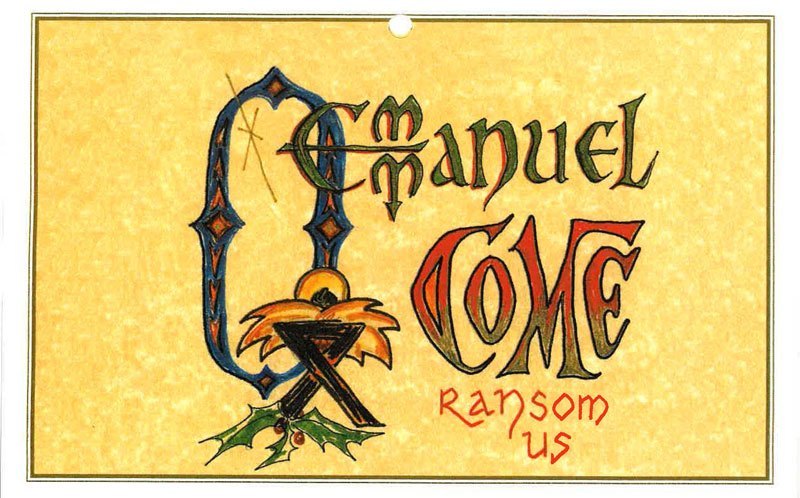
The last of the great antiphons: O Emmanuel! Advent culminates all of Israel’s hopes, and the hope of all nations, in One who is to come, and who has come to us through Mary’s immaculate womb. There is often so little room in our hearts. But the Great Antiphons of this last week of Advent help us to prepare a place for Jesus Christ, so that He might lay upon the straw of all our desires.
Did Jesus comes as a baby like we all came into this world, because we are always children at heart?
The name “Emmanuel” means “God with us.” This antiphon reminds us of the incredible reality that our Supreme God and Creator truly did become man. The Second Person of the Holy Trinity – God the Son – became Incarnate because of His unconditional love for us and His desire to save us. Though difficult to fathom, the truth is that the Ruler of the Universe, the Alpha & Omega, the eternal God, united Himself to a human nature & entered this world in the most humbling way: as a babe in swaddling clothes. God as man was then cared for by His mother Mary. He required diaper changes & had to learn to walk & talk just like we do. God being with us, also allowed Himself to suffer as we do. At the end of his life, Jesus Christ freely accepted humiliation, the cruelest form of torture, abandonment by friends, the excruciating pain of crucifixion and death in order to redeem the world and bring salvation to us all. What an awesome reminder of the love God has for us and of how ever-grateful we should be for all God has done for us.

Faith gives joy. When God is not there, the world becomes desolate, & everything becomes boring, & everything is completely unsatisfactory. It’s easy to see today how a world empty of God is also increasingly consuming itself, how it has become a wholly joyless world. The great joy comes from the fact that there is this great love, & that is the essential message of faith. You are unswervingly loved. … Unbelief, too, is a heavy burden & in my opinion even more so than faith is. Faith makes man light. This can be seen in the Church Fathers, especially in monastic theology. To believe means we become like angels, they say. We can fly, because we no longer weigh so heavy in our own estimation.”  –Cardinal Joseph Ratzinger

The O Antiphons 2019 – O King and Law Giver

Jesus is the King and Lord of the universe, of our personal universe and of the entire created universe, of all things seen and unseen. A king is not only a ruler/rex, but also a protector and advisor.
The Jews had long conceived of God as their special tribal God, one who would, for example, deliver them victory in battle over their enemies; the Psalms are full of such references. He is the King of Glory, before Him all the nations shall bow, and every tongue shall confess His holy name.

Jesus is a King who is so loved His people that He suffered for them. This is a direct inversion of the world order; this is revolutionary. He came not to command, but because He loved, and He calls forth our own love. He is not just a King, He is a creator, and He comes to die – and rise – that His creation should live with Him forever.


The Augustinian monk, Fr. Pius Parsch, wrote in the 1950s, “The antiphon should provoke enthusiasm for the conversion of pagans. Try to realize how ardently Christ desires that we carry the gospel to non-Catholics [and today even to Catholics poorly catechized]; to all of us, directly or indirectly, His apostolic commission is addressed. Each one of us can at least pray for the conversion of those still ignorant of Christ.”

A Rex/ruler is the source of unity. In Jesus, the unity of believers, Jew and Gentile, is known. He’s spoken of as the cornerstone: the peacemaker where St Paul said “There is neither Jew nor Greek; neither slave nor free person, there is neither male nor female. For you are all one in Christ Jesus” (Gal 3:29). But our King / Rex is also the Source of Unity within our own hearts and minds, within our families, city and nation. We need His help so desperately in this second decade of the new millennium.

Come, Lord Jesus, be the King of our hearts!

The O Antiphons 2019 – O Radiant Dawn

O Radiant Dawn, splendor of eternal light, sun of justice: Come, shine on those who dwell in darkness and the shadow of death!
 
We ask Christ to enlighten us by His coming. Who are they who sit in darkness and in the shadow of death? Pagans and unbelievers, sinners and atheists. But also in us ” the Faithful” there is still much darkness much of death’s shadow. Open your soul and let the divine light shine in!              -Abbot Guerager OSB (19th c Abbot of Solesmes Abbey for nearly 40 years) He is considered the “grandfather” of the 20th c Liturgical Movement; The Liturgical Year Advent
 
 
Photo of a detail of the reredos in the National Cathedral, Washington, DC, by Fr. Lawrence Lew, OP
It is especially fitting that we pray this antiphon today, on the Winter Solstice. Today is the shortest day of the year in the Northern Hemisphere. This title of Christ, Oriens, means daybreak, dawn, sunrise, the East, the beginning. The O antiphon for Dec. 21th begins by addressing our Savior as O Oriens, O Dayspring or Dawn rising from the East.
Oriens when translated from the Latin of today’s antiphon is understood as meaning Radiant Dawn, Rising Sun, or Dayspring from on High. “All beautifully express the idea of light shattering the darkness of night, of sin and death, of sickness and despair, with its brightness bringing healing and warmth to cold hearts. Jesus is indeed the true light, the radiance of his Father’s splendor. The church prays this petition daily in the Benedictus, joining in the words of Zechariah: “He, the Dayspring, shall visit us in his mercy to shine on those who sit in darkness and in the shadow of death”(Luke 1:78-79).
Today is also an Ember Day on which our Bishop, Joseph Strickland, has encouraged everyone in our Tyler diocese to pray and make sacrifices in reparation for the crisis within the Church. Let us pray especially for all “those who dwell in darkness and the shadow of death”. Those who live in the darkness of sin, ignorance of our Catholic faith; the darkness of addictions, depression, loneliness and misery. Those who dwell in the shadow of death, physical death in which they should prepare themselves to meet God; those in the death of mortal sin; the death of insanity.
Come Lord Jesus and shine the Light of your Love upon us all.

The O Antiphons 2019 – Come, O Root of Jesse

December 19 – O Root of Jesse
O Flower of Jesse’s stem, you have been raised up as a sign for all peoples; kings stand silent in your presence; the nations bow down in worship before you. Come, let nothing keep you from coming to our aid.
Come, Lord, of the family of Jesse, and make us a part of your divine family. There are many families suffering today. Our society has turned against the sacredness of family life. Let us pray for all families, secure ones, broken ones; those suffering in poverty and war; those suffering in dysfunction and addiction. Those who have no religious home to strengthen them against the
“snares of the devil.” And, don’t forget to pray for those who are struggling to live according to the teachings of the Catholic Faith.

The O Antiphons 2019 – Come, O Key of David

The beloved Advent hymn, O Come, O Come, Emmanuel, is a musical rendition of the O Antiphons. The O Antiphons have been part of the Church\’s liturgy for more than a thousand years. Scholars say that Boethius (480-524, a Roman senator and philosopher) mentions them. They first were used in monasteries, but by the 8th century, they were common throughout the Church. While the words that most people sing today come from early 18th century Germany, the music dates back to 15th century France. Let us continue this powerful tradition.

December 20 – Come, O Key of David

The purpose of a key is to unlock and open something. Humanity has been, and still is, locked and enchained in sin, selfishness, addictions of various kinds, since it existence.
God is the only One who holds the KEY to free us. JESUS is that Key. As St. Catherine of Siena wrote, “All the Way to Heaven, is heaven, because Jesus is the Way.”
Let us pray that we will open ourselves to God\’s grace this Christmas Season so that the Holy Spirit can transform our lives; and the lives of our family and friends. May all who have left the Church, respond to the Father’s invitation to come Home this Christmas.

The O Antiphons 2019 — Come, O Wisdom and Lord

An Advent tradition from the 8th century to prepare for the ever-closer arrival of Jesus, Christ our Lord, anew in the world and in our hearts is to say the “O Antiphons” in the days leading to Christmas Day beginning with December 17th (yesterday). 

Monasteries around the world make their solemn entrance into the last week of preparation before Christmas with the great O Antiphons sung as the antiphon for the Magnificat. These beautiful antiphons, pregnant with meaning

Each Antiphon begins by proclaiming the names of our Messiah found in the Old Testament—Wisdom, Lord, Root of Jesse, Key of David, Radiant Dawn, King of Nations and Emmanuel. The names remind us of the rich blessings of our Savior to the world.

Perhaps you would like to say the antiphon for the day before your evening meal. It is a particularly joyful ritual to say with children. After saying the “O Antiphon” you can talk about what the name might mean. 

December 17 – COME, O WISDOM
The Wisdom of God created all that exist. Let us try to treat every person as a child of God.
December 18 – COME, O LORD
O Adonai, and leader of the House of Israel,
who appeared to Moses in the fire of the burning bush
and gave him the law on Sinai:
Come and redeem us with an outstretched arm
O Lord, fill our hearts with the fire of Your Love so that we might obey You in all things, and attain, at last, our true home in heaven.