
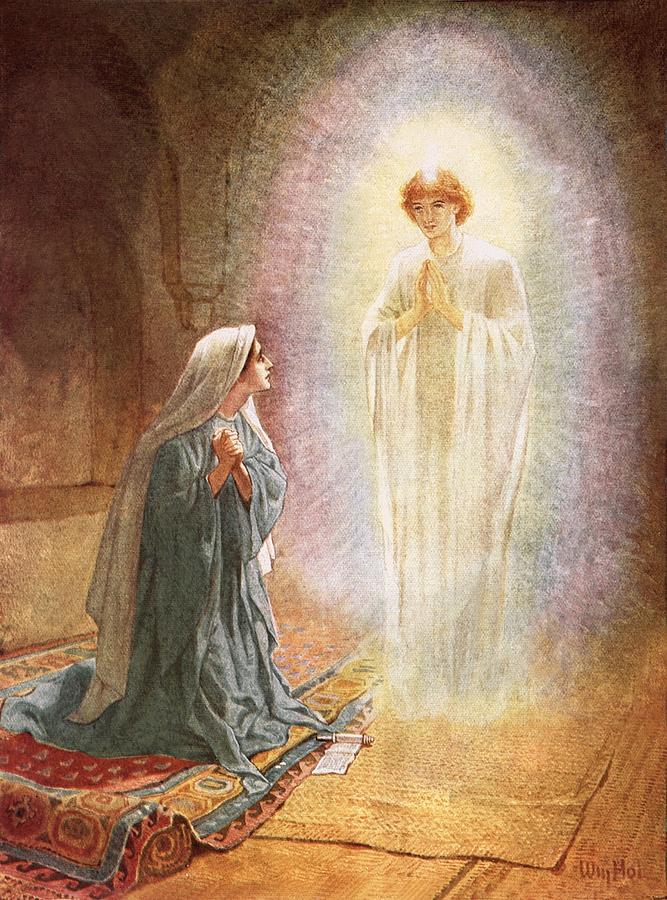
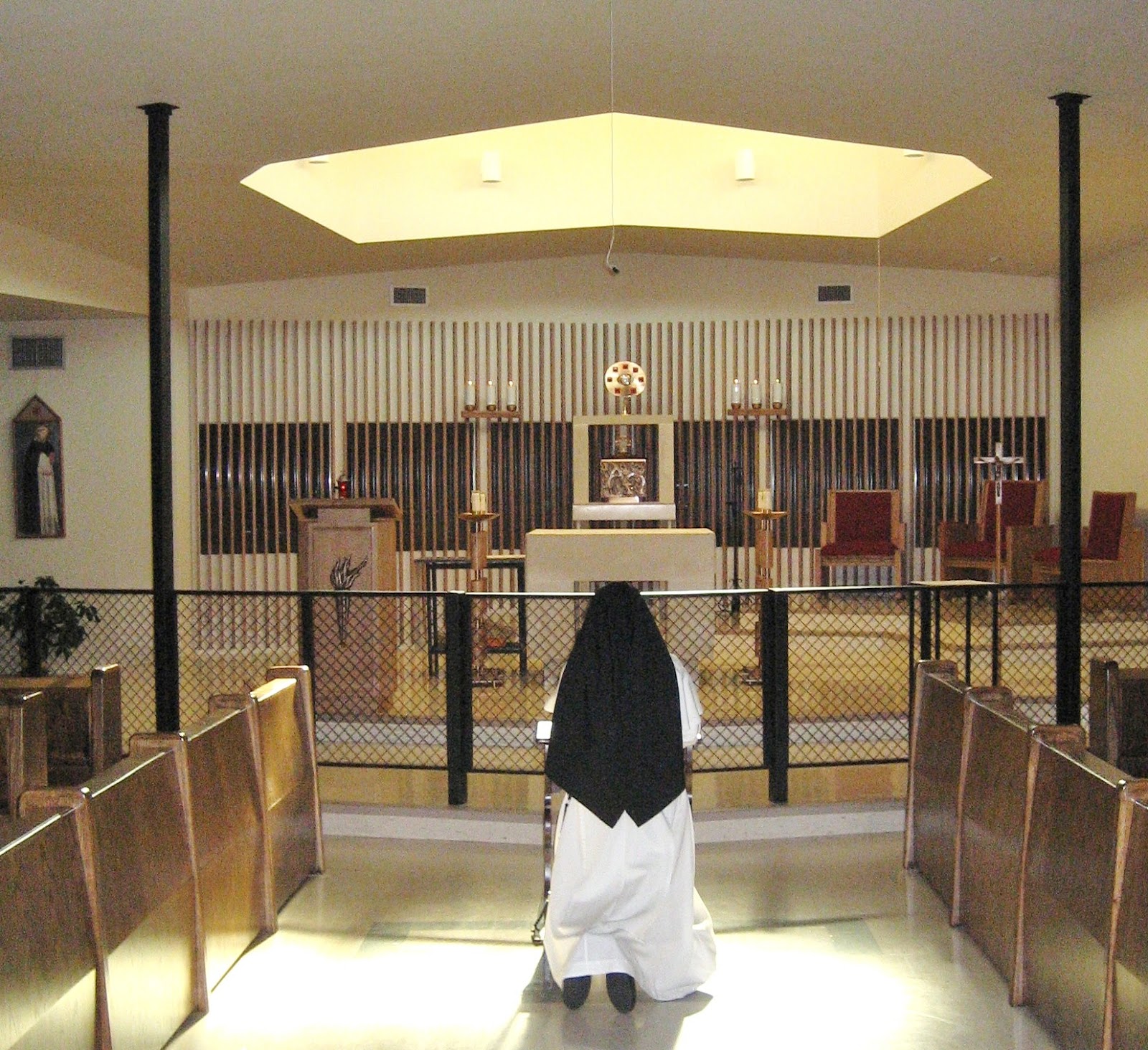
Twice a year we have what we call, \”Solemn Chapter.\” The two days are the eves of the Annunciation and Christmas. We gather in our Chapter Hall in the pre-dawn hours after the Office of Readings and Morning Prayer. This year we began with Sister Mary Christine singing the account of the Annunciation from the Gospel of Luke. At the climax, all prostrate themselves (or best they can) in gratitude for the Incarnation and worship of our Merciful God. Afterwards, we listen to the Sermon, today given by our Novice, Sister Mary Therese.

It is posted below if you would like to read it. Sister compares Mary\’s ascent to God\’s will to our call to religious life. But as you reflect on it, you might want to consider how your own personal response to God\’s call in your life and vocation is intertwined with that of Mary.
Solemn Chapter: Annunciation 2017
Year ago, God called a woman to serve Him in a special way. He chose an ordinary woman to undertake an extraordinary vocation, to be in a special relationship with Him and to help bring Christ into the world. This woman was you. This woman was me. This woman was all of us whom God has called to a religious vocation. The Virgin Mary was the first and most perfect woman He called to this special role, and even though our vocation is not quite the unique one that hers was, we can all look to her for inspiration and guidance on how to live the vocation to which God has called us.
The Annunciation begins when “the angel Gabriel was sent from God … to a virgin betrothed to a man named Joseph.” From this, we learn that God has already prepared Mary for this extraordinary calling. She doesn’t have any other duties or family that will interfere with her role as the Savior’s mother, but she’s also not alone. God has already given her Joseph, who will take care of and protect her and Jesus when they need him. In the same way, when someone receives a call to a religious vocation, she often realizes, in retrospect, how God has planned things in her life to allow her to accept the call. Things given, or even denied, have helped to prepare her to be in a position in life in which accepting the call is made easier. God is always watching over us and guiding us towards what He knows is best for us. As it says in Jeremiah, “For I know well the plans I have in mind for you…plans for your welfare, not for woe; plans to give you a future full of hope.”
The angel Gabriel’s first words to Mary are, “Hail, favored one! The Lord is with you.” Mary is called because she is precious to God. The call itself might be sudden, but God has always been with her, and she can find comfort in His presence. In a similar way, when a woman is called to the religious life, she feels a very special presence of God in her life, a presence that makes her feel that she is a favorite of God and is being especially chosen to be with Him.
But Mary’s reaction is one of fear and confusion: “But she was greatly troubled at what was said and pondered what sort of greeting this might be.” Even though Mary knows and trusts God, she is still understandably distressed by the angel’s words. Not only is this message unexpected, but Mary has a strong reverence for the power and majesty of God and therefore understands the magnitude of what it means to be favored and called by God. A call to any vocation often causes fear and uncertainty. The one called may be scared of the unknown or of the crosses to be encountered in the vocation. This fear is natural, and is a sign that they are taking the call and everything it includes seriously.
The angel Gabriel assures her, “Do not be afraid, Mary, for you have found favor with God.”Mary is assured that being chosen by God is a good thing. Being favored by God is a great honor, and she should not be afraid because God will continue to favor her throughout her vocation. In the same way, women who are called to the religious life can continue to find comfort in God throughout the trials of their vocation.
Gabriel then tells her specifically what she is being called to do: “Behold, you will conceive in your womb and bear a son, and you shall name him Jesus.” The Annunciation is the beginning of Jesus’ mission on earth, and Mary has the special role not just of physically bringing Him into the world but also of taking care of Him and supporting Him in His mission. Christ comes to us through Mary. In a similar way, all religious women are called to bring Christ into the world in a special way, through our example, through our embracing of the truth of Christ, and through our charity for others, all of which come from God.
Mary is still understandably confused by this declaration, and asks, “How can this be?”Mary knows her own situation and abilities, and doesn’t understand how she, a mere girl, can help God in this amazing way. She trusts God, and she knows that she needs His guidance and help. A normal reaction to any awareness of a calling is to question whether we are understanding it correctly, whether God is really calling us in all our imperfections and deficiencies to such a special vocation. We trust God, but we question our own ability and worthiness to serve Him.
The angel Gabriel then assures her, “The Holy Spirit will come upon you, and the power of the Most High will overshadow you.” Mary is called to do an extraordinary, even seemingly impossible thing, but she will be able to do it because God will help her. Through the Holy Spirit, God will give her the grace, ability, and strength to do what He is calling her to do. And God still uses the Holy Spirit to give us all of the graces and talents we need to serve Him in whatever He calls us to do. When we follow a call, we don’t act with our own power, but with God’s. God doesn’t call the qualified, He qualifies the called.
Gabriel then gives Mary a sign by which she can be assured of the truth of her calling: “Elizabeth, your relative, has also conceived a son in her old age.” Mary has faith in God, but a sign is also helpful in confirming a calling. And it will be helpful for Mary to be with someone who is experiencing a similar miraculous experience. When God calls someone to a vocation, He often guides them towards someone who will be supportive and help them in discerning and embarking upon their new life. God gives us other people to help and support us in our vocation.
Finally, the angel Gabriel assures Mary, “Nothing will be impossible for God.” God is doing this extraordinary thing, not Mary. She doesn’t have to rely on herself or her own talents to be the mother of God. She just has to trust and allow God to work in her life. Trust is one of the most important things that anyone can do for God, particularly when being called to an extraordinary vocation. There are so many unknowns and so many struggles that the call cannot be answered without putting ourselves in God’s hands, trusting that He will take care of us and be everything that we need in order to do what He asks of us.
Mary responds, “I am the handmaid of the Lord.” In accepting her calling, Mary recognizes that she is the servant of God. She is not being called to do what she wants under her own power, but her vocation is to serve and help God in whatever He needs her to do. Women religious are chosen to be special servants of God and to serve Him in a way no one else can. We respond to the call by giving ourselves completely to God in whatever He needs of us.
In Mary’s final acceptance of the Annunciation call, she declares, “May it be done to me according to your word.” With these words, Mary completely accepts her vocation. She responds to God by making herself completely open to everything that He wants from her and everything that she will experience as part of her calling. The perfect response to a call from God to any vocation is to accept whatever God wants us for, without conditions or holding anything back.
In our call to the religious life, we are all called to imitate Mary, beginning with how we respond to the call itself. Initially there might be fear and confusion, but we need to trust that God will be with us and will give us the grace and talents we need to do what He is asking us to do. So just like Mary, we need to accept completely and readily our vocation and all of the crosses and joys that come with it, and always keep our mind and heart with God as we live the life of a religious. Maybe that’s why so many of us have taken “Mary” as our religious name: not only are we calling upon her to help and guide us in a special way, but we are also embracing our roles as new Marys in our response to this special relationship with Jesus Christ.












 Dominican Life on Lotus Lane